
As the first quarter of 2026 comes to a close, one statistic demands the attention of industry insiders: the domestic unmanned retail sector has seen over 16 financing events, totaling approximately 3.16 billion RMB (around $43 million USD).
To put this into perspective, the average funding per transaction has grown by 42% compared to the same period last year. More notably, early-stage projects (Series A and earlier) account for nearly 44% of these deals. This indicates that capital is not merely harvesting mature companies; it is actively seeding the future of the industry.
Why has a sector once dismissed as a traditional, low-margin business suddenly become a magnet for investment? Here is a deep dive into the underlying logic.
1.The Data Speaks: Three Pillars of the Funding Boom
The outdated perception of unmanned retail as “a few vending machines selling drinks” no longer holds true. The data reveals a fundamentally different landscape.
First, the business model has been proven. In premium locations such as universities, transit hubs, and large-scale factories, the payback period for unmanned retail equipment has shrunk to 6-12 months, with stable annual ROI ranging from 30% to 50%. This outperforms office rental yields in tier-one cities and beats most bank wealth management products. It is not a speculative story; it is grounded in solid financials.
Second, technological maturity has crossed a critical threshold. AI visual recognition accuracy has stabilized above 99.5%, remote management systems are highly reliable, and facial payment penetration is approaching 60%. Crucially, core hardware costs are dropping. The cost of visual modules has fallen by 50% in two years, significantly lowering the barrier to scaled replication.
Third, the value of foot traffic is being redefined. Unmanned retail terminals are no longer just point-of-sale machines; they are vital offline traffic entry points. Every transaction generates user data, and every door opening builds a consumer profile. This dual value of “retail plus traffic” has dramatically expanded the sector’s potential.
2. Early-Stage Dominance: What is Capital Actually Buying?
The fact that early-stage projects account for 44% of recent funding is a telling detail. Capital is not just adding icing to the cake; it is providing essential fuel. Investors are not betting on the market share of a single mature enterprise, but rather on the overarching rise of the industry.
Specifically, capital is flowing into three main areas:
- Smart Hardware R&D: As the upstream of the supply chain, whoever controls core hardware capabilities holds pricing power. Breakthroughs in AI visual modules, flexible cargo channels, and energy-efficient compressors are redefining what a retail machine can be.
- Scenario-Based Operations: Good machines require prime locations. Capital is backing operators capable of securing high-value scenarios and building operational moats. Locations like hospitals, universities, and transit hubs offer stable cash flow once secured.
- SaaS Management Platforms: As fleets scale from dozens to thousands of units, management complexity increases exponentially. Remote monitoring, smart replenishment, data analytics, and dynamic pricing are now baseline requirements, not optional bonuses.
Capital is investing in the digital upgrade of the entire supply chain, not just isolated links.
3. The Matthew Effect: The Race for Prime Real Estate
The flip side of the funding boom is accelerated industry consolidation. Head operators are expanding their market share through acquisitions and aggressive location securing, while smaller operators face mounting pressure from rising rents and procurement disadvantages.
Prime real estate is a scarce resource. A hospital ward, a university cafeteria, or a factory dormitory typically comes with a 3-to-5-year lease. Once locked in by major players, the window of opportunity for latecomers shrinks rapidly.
Simultaneously, international expansion has become a new battleground. Unmanned retail demand is surging in the Middle East and Southeast Asia. Leveraging mature supply chains and technological advantages, Chinese brands are accelerating their global footprint, with leading companies now covering over 600 cities worldwide alongside expanding after-sales networks.
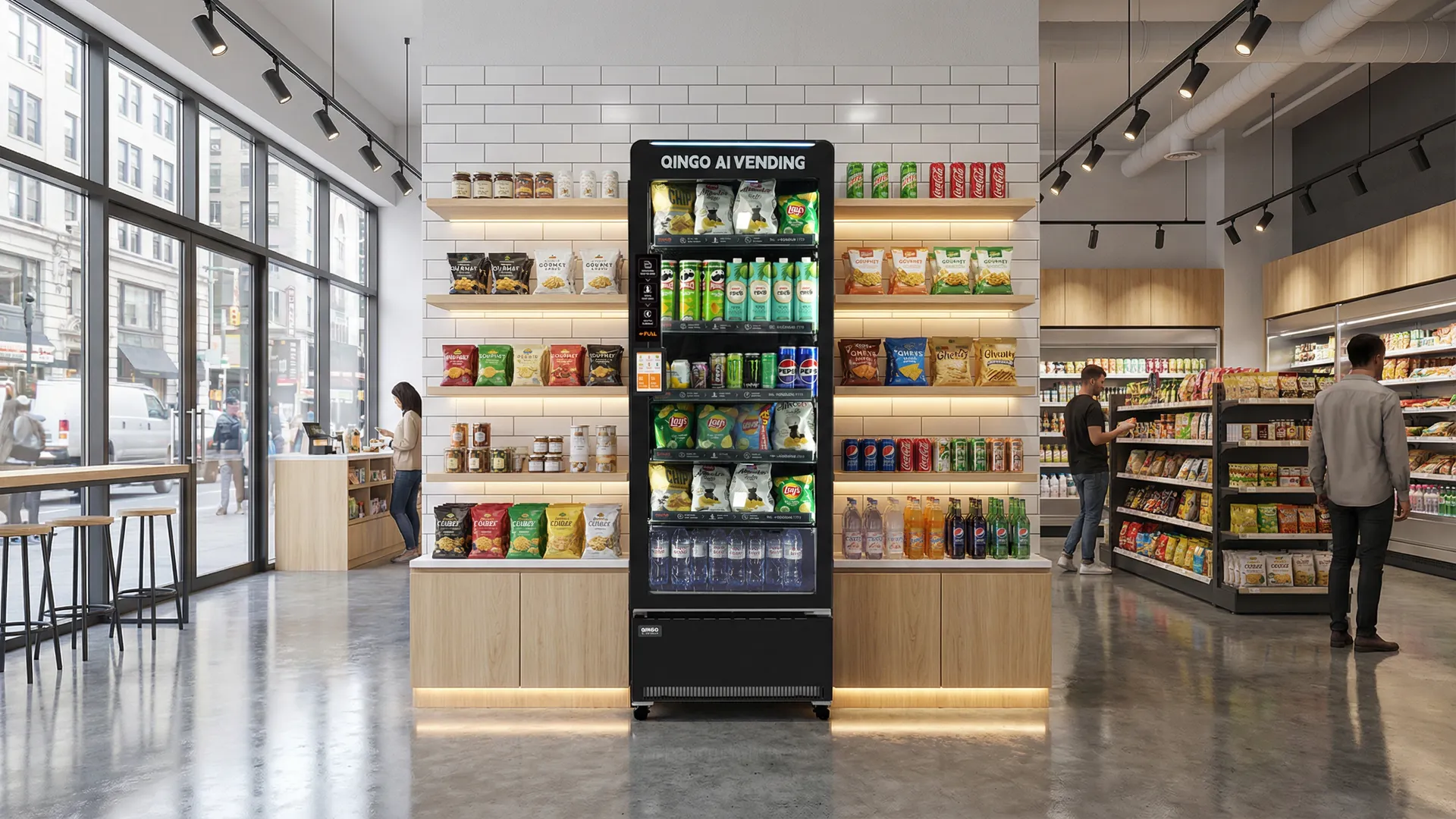
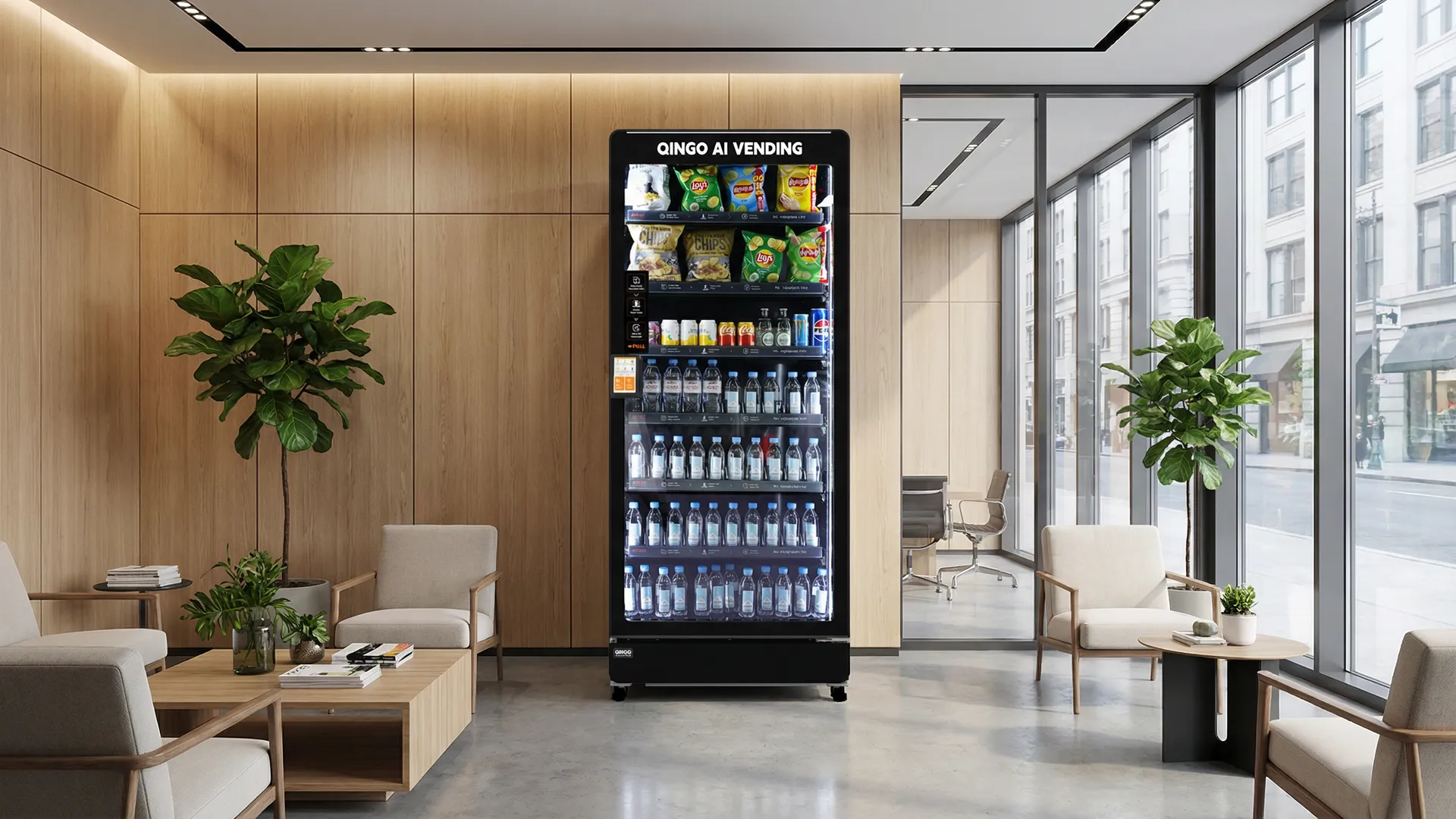
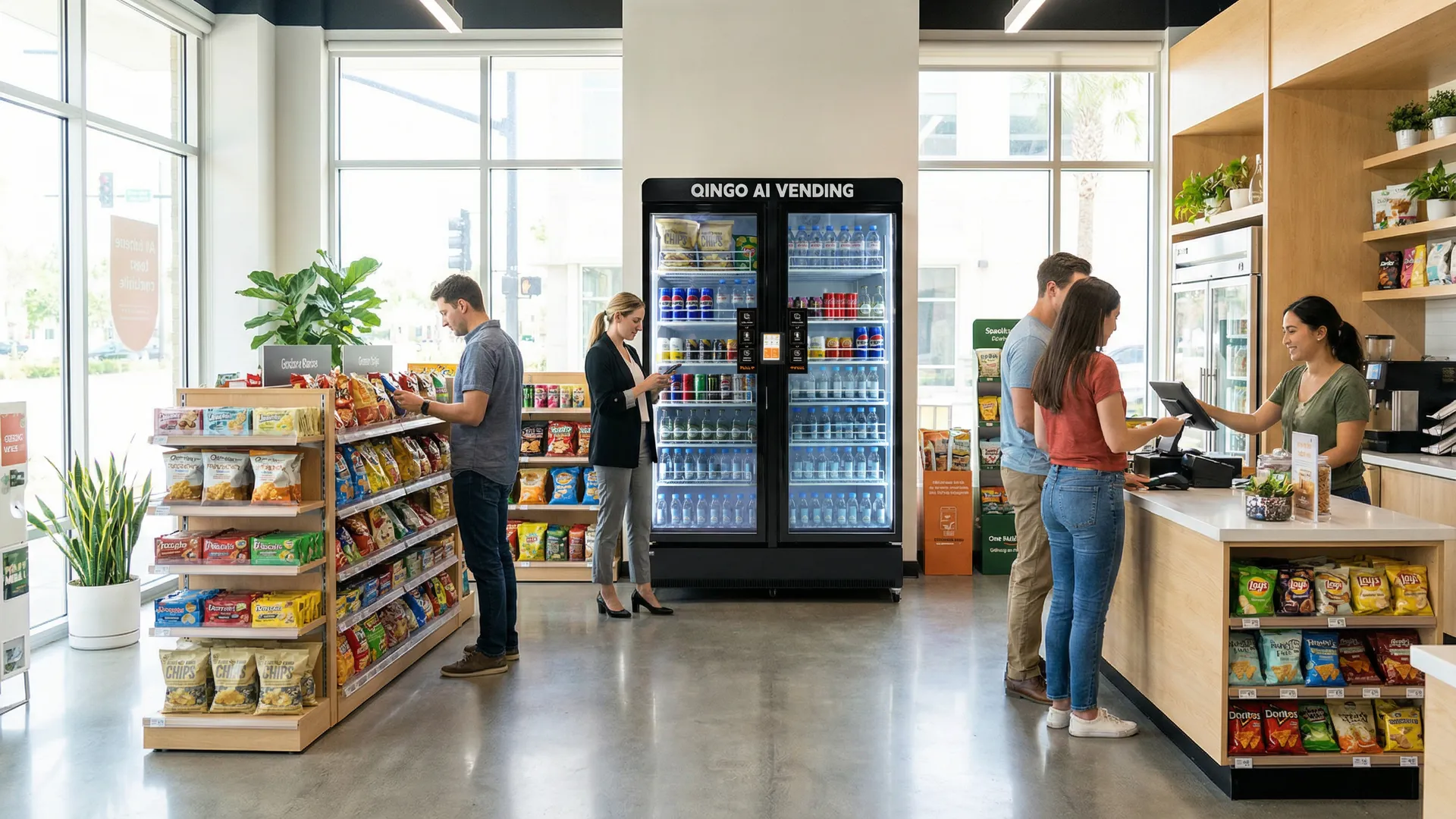
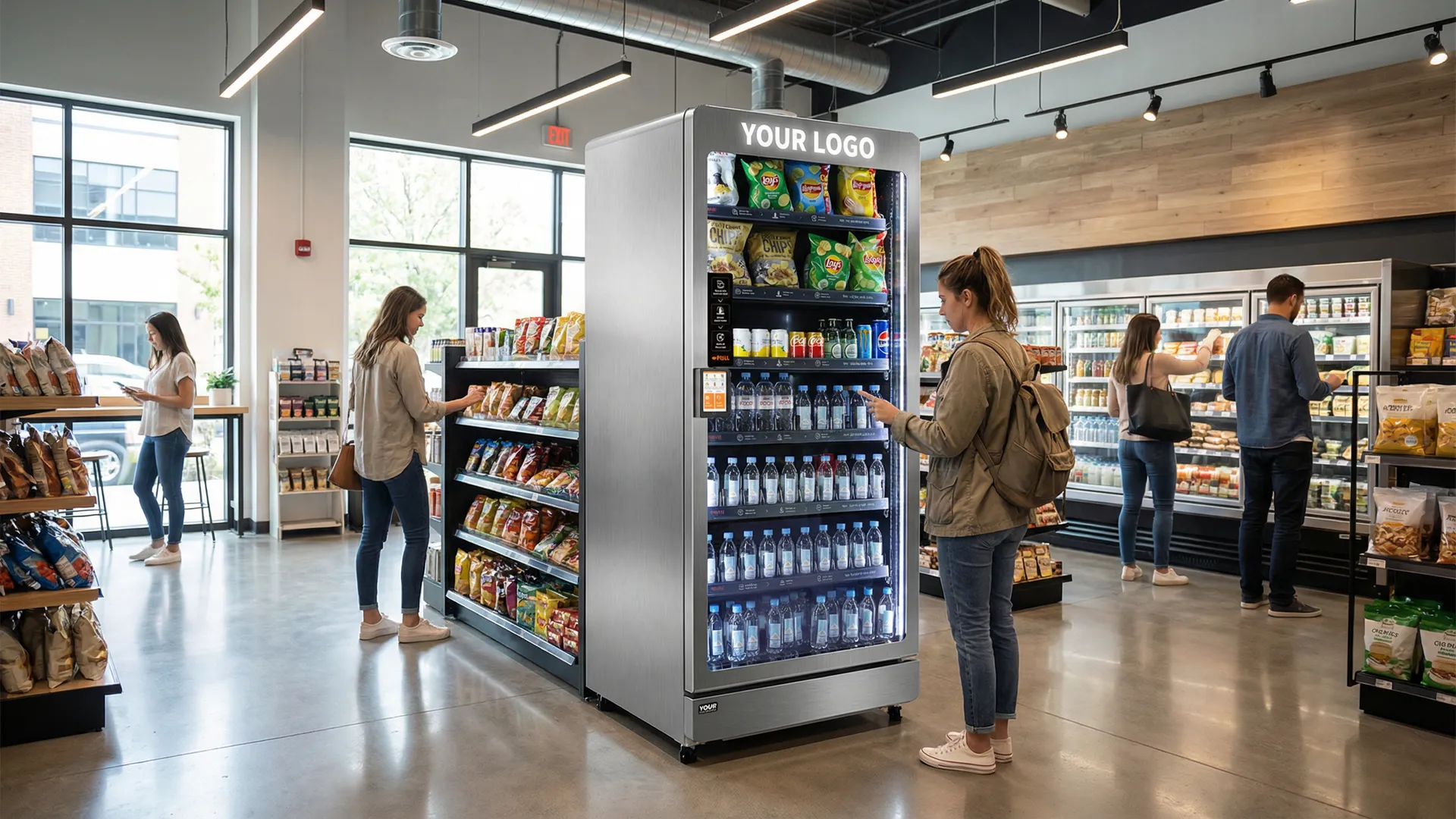
4. Accelerated Tech Cycles: From Three Years to 18 Months
The pace of technological iteration has drastically increased. What used to take three years from R&D to deployment now takes under 18 months.
This is driven by supply chain maturity, faster scenario validation (with 3 million smart terminals providing a massive testing ground), and capital pressure demanding visible progress.
The tech trends for 2026 are defined by four keywords:
- Intelligence: AIoT is becoming standard, with smart scheduling and auto-replenishment boosting operational efficiency by up to 50%.
- Green Tech: Energy-efficient compressors and solar power align with carbon neutrality goals while cutting operating costs.
- Diversification: Expanding beyond pre-packaged snacks to fresh food, groceries, and pharmaceuticals.
- Globalization: Overseas markets are emerging as a new growth engine for Chinese brands.
5. The Fundamental Shift: From “Selling Machines” to “Providing Services”
The deepest transformation in the industry is not technological, but commercial.
For the past decade, the logic was simple: equipment manufacturers sold machines to operators, who placed them in locations to profit from product markups and rent arbitrage. This model is being disrupted.
The new paradigm is service-oriented. Equipment manufacturers now provide comprehensive solutions; operators offer digital management capabilities; and brand owners actively participate in operations rather than just supplying goods.
This shift represents the broader evolution of the industry.
The Bottom Line
Why is capital flooding in right now? Because the timing is right. Technological maturity, proven business models, and market scale have all reached a tipping point.
With the global unmanned retail market projected to hit $25 billion in 2026—with China accounting for over 30%—this is not a fleeting trend. It is a structural shift.
Unmanned retail is, at its core, an efficiency revolution in the retail sector. Ultimately, the winners will be those who deeply understand the business essence: providing superior convenience and meeting instant consumer needs. The door to this market is wide open.
QUICK ENQUIRY
·
QUICK ENQUIRY
·
QUICK ENQUIRY
·
QUICK ENQUIRY
·
QUICK ENQUIRY
·
QUICK ENQUIRY
·
QUICK ENQUIRY
·
QUICK ENQUIRY
·
QUICK ENQUIRY
·
QUICK ENQUIRY
·