
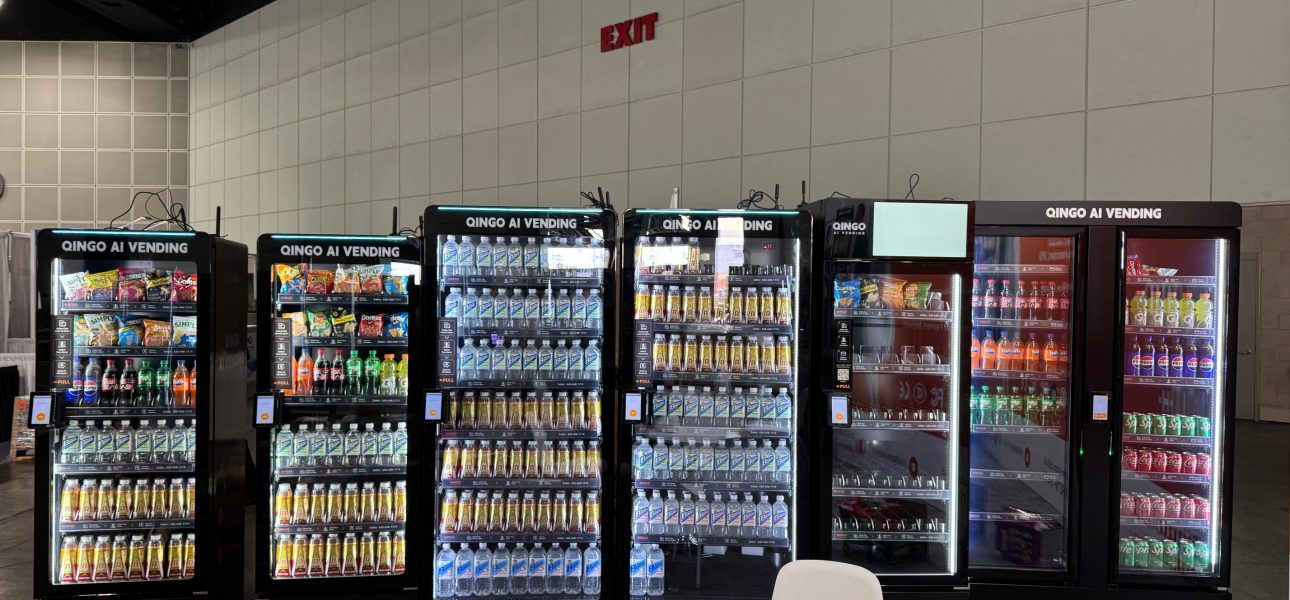
For years, the narrative surrounding the smart cabinet industry has been fixated on hardware evolution. We are told that machines are becoming “smarter”: recognition algorithms are more precise, payment gateways are seamless, and backend dashboards offer granular control.
While these technological leaps are factual, they paint an incomplete picture. For those of us entrenched in the day-to-day reality of managing thousands of units, the most significant shift hasn’t been the sophistication of the machine, but the increasing complexity of the operation.
Hardware is no longer the differentiator; it is merely the baseline. The true challenge—and the only path to sustainable profitability—now lies in operational excellence.
📉 The End of the “Land Grab” Era
If we look back just a few years, the strategy for many operators was straightforward: deploy fast, secure locations, and optimize later. The market was in an expansion phase, characterized by untapped scenarios and users who were curious about this new form of retail. In that environment, speed and footprint often trumped operational finesse. Growth could mask inefficiencies.
Today, that红利 (dividend) has evaporated.
The common high-traffic locations—offices, campuses, industrial parks—are saturated. The “low-hanging fruit” is gone. We have moved from an era of deployment to an era of survival. The question is no longer “How do we get the cabinet out there?” but rather, “How does this unit survive and thrive long-term?”
This requires a fundamental shift in capability. It is no longer about resources and speed; it is about inventory turnover, loss prevention, user retention, and supply chain synergy.
🛠️ Hardware Solves “Can,” Operations Solve “Why”
There is a common misconception among outsiders: if the device is smarter, the business should be easier. This logic assumes that technology solves the commercial equation. It does not.
Hardware upgrades solve the transactional feasibility—the ability to open a door, identify a SKU, and process a payment. These are table stakes. Without them, you cannot play the game. However, the ability to complete a transaction does not guarantee repeat business or profit.
Real sustainability is driven by operational answers to difficult questions:
- Does this specific location have genuine, recurring demand?
- Is the product mix aligned with the micro-demographics of the users?
- Are top sellers constantly out of stock while slow-movers accumulate dust?
- Can the team diagnose a sales dip and react within hours, not days?
These challenges cannot be solved by a better camera or a faster processor. They are solved by rigorous, unglamorous operational discipline.
⚖️ The Cost of Error is Higher Than Ever
The competitive landscape has shifted dramatically. Smart cabinets are no longer competing just with other cabinets; they are fighting against convenience stores, instant retail delivery, vending lounges, and corporate福利 (welfare) programs.
In the past, a user might try a smart cabinet simply because it was novel. Today, the novelty has worn off. Users are rational. They compare prices, convenience, and variety. If your cabinet is slightly more expensive, slightly slower to restock, or consistently lacks their preferred item, they will switch channels immediately.
The margin for error has shrunk.
- Wrong Location: Adjustment costs are higher.
- Wrong Product: User churn is faster.
- Slow Restocking: Revenue drops are immediate.
🔮 The Future: Efficiency Over Specs
Looking ahead, hardware specifications will inevitably converge. Features available today will become standard tomorrow. The gap between one manufacturer’s AI recognition rate and another’s will likely narrow to a negligible difference.
The divergence will happen in the operational system.
Future winners won’t be defined by who has the fanciest screen, but by who can execute the basics with relentless consistency. The gap between success and failure will be measured in how quickly a team identifies a problem, how stably they execute restocking routes, and how well their data informs decision-making.
At Qingo, we see this clearly. While we continue to innovate on the hardware front—ensuring our King 509 and Ace 779 models offer superior reliability and AI accuracy—we know that these machines are only as good as the strategy behind them.
The industry has matured. It no longer rewards “looking smart”; it rewards being efficient. The equipment gets you in the door, but operations keep you there.
QUICK ENQUIRY
·
QUICK ENQUIRY
·
QUICK ENQUIRY
·
QUICK ENQUIRY
·
QUICK ENQUIRY
·
QUICK ENQUIRY
·
QUICK ENQUIRY
·
QUICK ENQUIRY
·
QUICK ENQUIRY
·
QUICK ENQUIRY
·