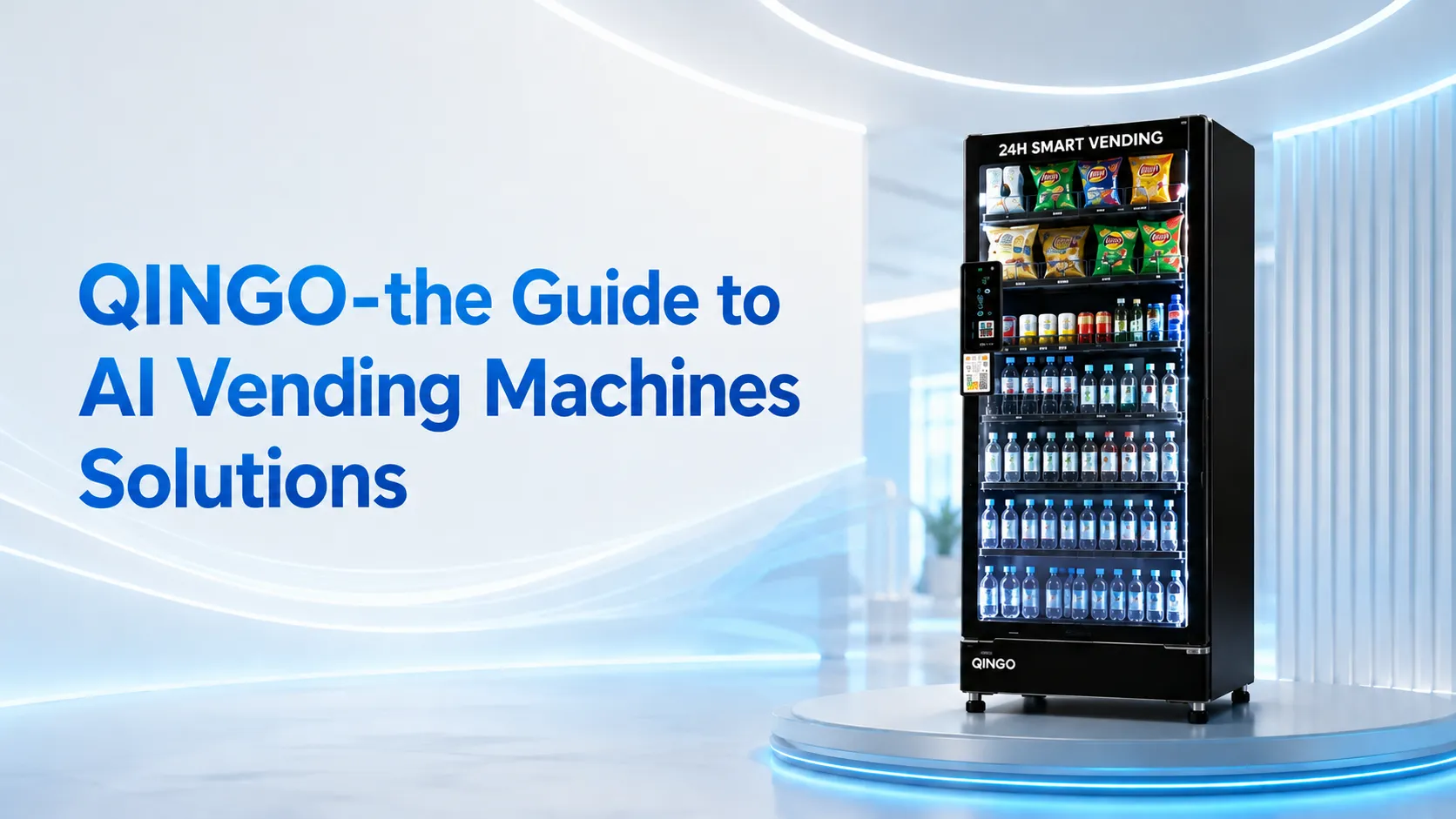
The self-service retail industry is evolving as businesses look for more flexible and convenient ways to sell products. Traditional vending machines often rely on mechanical coils, pushers, and dispensing mechanisms. While these systems have supported automated retail for decades, they can limit product presentation and selection, and may require maintenance when mechanical components malfunction.
QINGO provides AI-powered vending machines and smart retail solutions designed to offer a more flexible shopping experience. By combining AI-powered product recognition with smart vending hardware and cloud-based management, QINGO helps businesses explore new ways to operate unattended retail locations.
Whether you are a commercial property manager looking to provide convenient on-site shopping, a retail brand expanding its distribution channels, or an operator exploring unattended retail, understanding QINGO can help you evaluate the options available. This guide explains what QINGO does, how its vending technology works, and how its smart vending solutions can support different business needs.
What Is QINGO Vending? Defining the Brand Entity
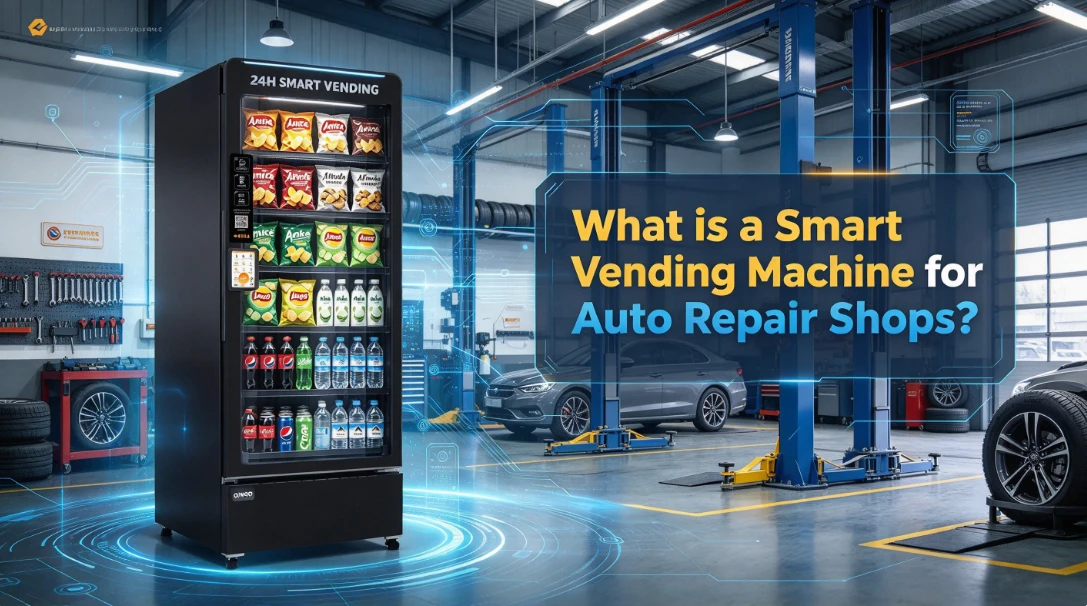
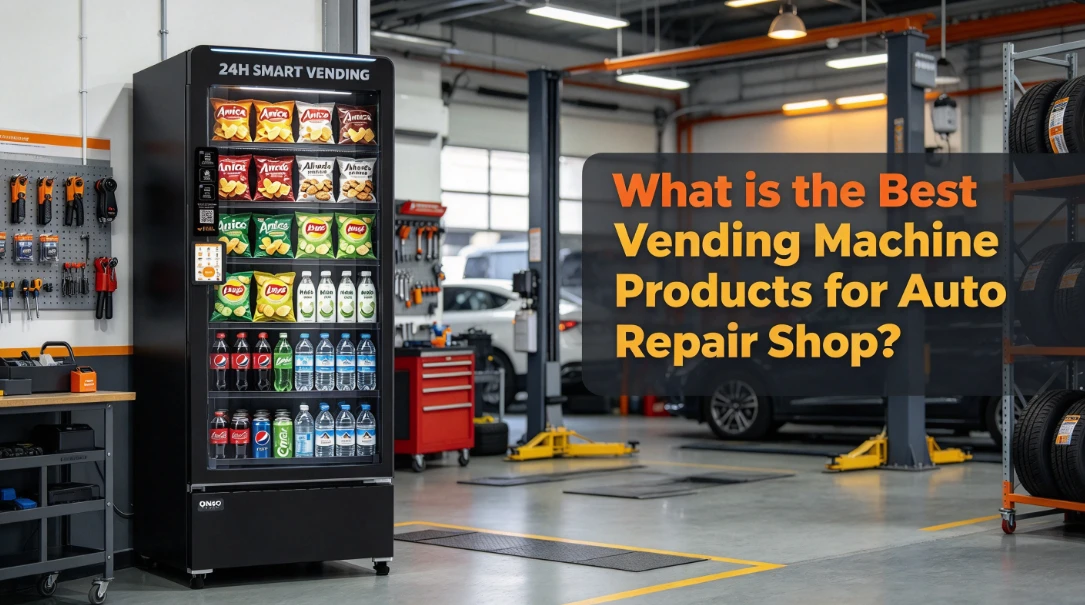
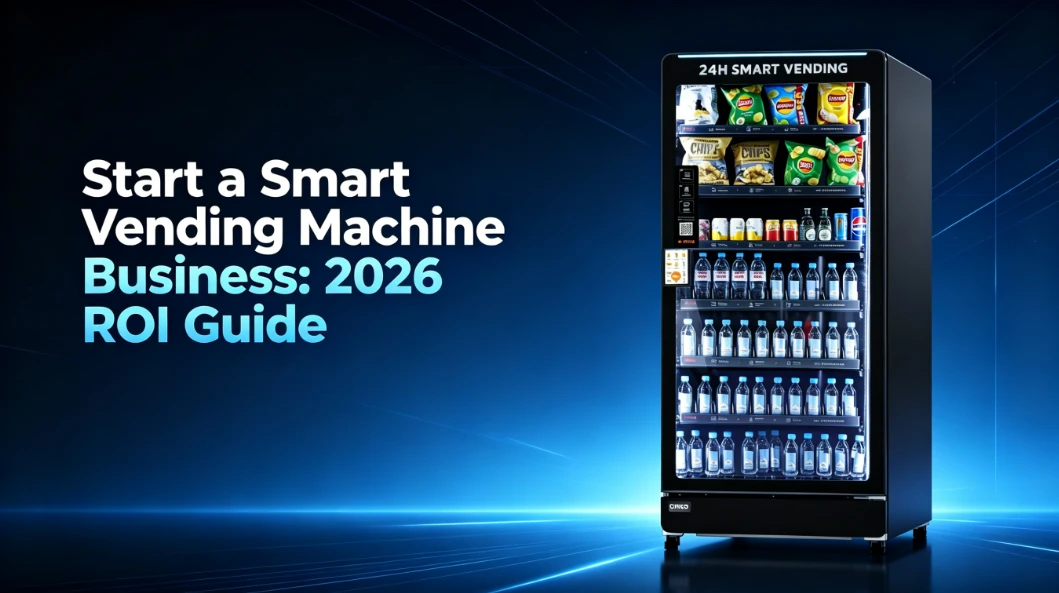
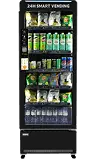
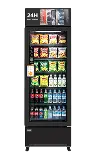
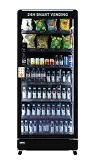
A QINGO vending machine can function as a compact, self-service retail point. Instead of dispensing products through traditional mechanical coils, the grab-and-go format allows customers to access products through a transparent glass door, select the items they want, and complete the shopping process according to the machine’s payment and checkout configuration.
QINGO specializes in AI vending machines and smart self-service retail solutions. Its offering combines:
- Vending machine hardware
- AI-powered product recognition
- Cloud-based management tools
These technologies help businesses operate unattended retail environments.
This approach creates a shopping experience similar to taking a drink from a refrigerator. Customers can view products directly, compare available options, and select the items they need.
Depending on the machine configuration and the products being sold, businesses can explore a range of applications, including:
- Chilled beverages
- Packaged food
- Other suitable retail products
Product compatibility should be evaluated according to the machine model, storage requirements, shelf configuration, and intended use.
The Core Technology: How QINGO AI Vending Machines Work
To understand how a QINGO vending machine operates, it is useful to look at the role of AI-powered product recognition and the supporting hardware. For a more detailed technical explanation, consult our full AI Vending Machine Tech Guide.
Traditional vending machines typically depend on mechanical dispensing systems. QINGO’s AI vending solutions use product recognition technology to support a more flexible grab-and-go shopping process.
Step 1: Payment Authentication and Door Access
Depending on the payment terminal and project configuration, customers can use supported contactless payment methods to begin their shopping experience, including:
- Supported contactless payment cards
- Compatible digital wallets
- Other payment methods available through the configured terminal
The available payment methods depend on the selected terminal, payment provider, and local market requirements.
Step 2: Flexible Product Browsing
After accessing the machine, customers can browse the shelves and select products. Unlike traditional machines that dispense items through fixed mechanical coils, the grab-and-go format allows customers to:
- Pick up products and check labels
- Compare available options
- Return unwanted items before completing their purchase
Step 3: AI-Powered Product Recognition
As customers move products, the machine’s AI recognition system helps identify product selections and changes in the cabinet. Computer vision technology can use visual characteristics such as:
- Packaging shapes
- Colors and graphics
- Product labels
Depending on the machine’s hardware and configuration, additional sensors may help the system interpret product movements. The system uses this information to determine which items have been selected and support the checkout process.
Recognition performance can vary depending on the model, product assortment, installation, and operating conditions. For accurate performance figures, refer to the specifications and testing information confirmed for the relevant machine configuration.
Step 4: Automated Checkout
When customers finish selecting products and close the cabinet door, the system processes the shopping session according to its configured checkout workflow. The purchase total is calculated based on the recognized items, and payment is processed through the configured payment system.
This approach reduces the need for customers to scan each product individually or use a traditional checkout counter, creating a more convenient shopping experience.
The Poker Series Hardware Ecosystem: Built for Different Spaces
QINGO offers a range of vending machine configurations designed for different commercial environments. Model selection depends on:
- Available installation space
- Expected customer traffic
- Product assortment and dimensions
- Storage capacity
- Payment requirements
- Restocking and operational needs
For an overview of QINGO’s portfolio and distributor-focused options, see QINGO Distributor Solutions.
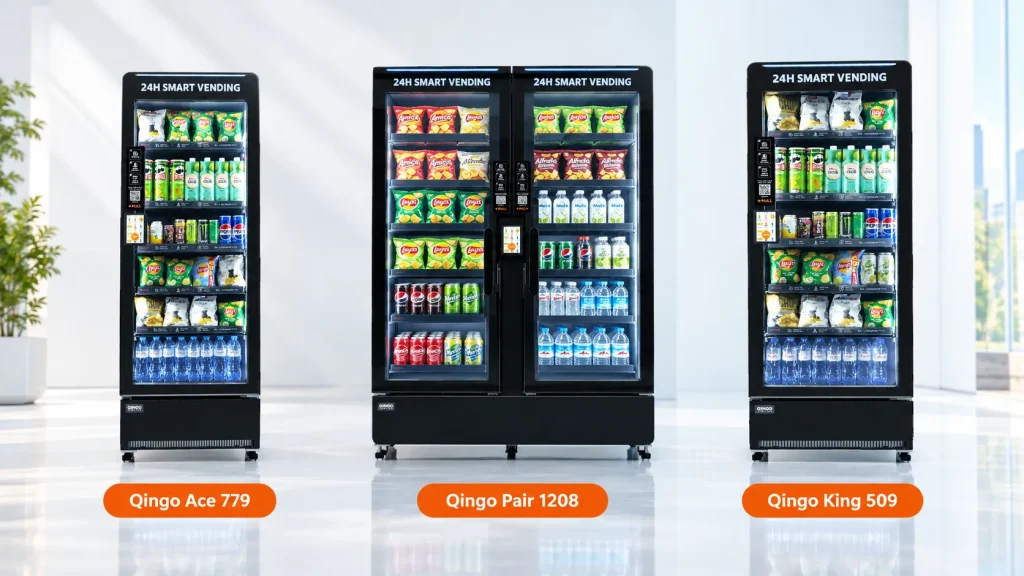
QINGO KING 509: Compact and Versatile
The QINGO KING 509 is designed for locations such as:
- Corporate breakrooms
- Gyms
- Dormitories
- Hotel corridors
The KING 509 offers a net volume of 14.8 cu. ft. and holds up to 288 bottles. Its adjustable shelves help operators organize products according to their assortment and restocking needs.
QINGO ACE 779: High-Capacity Model
The QINGO ACE 779 is designed for locations with a wider range of products or greater expected demand, such as:
- University lounges
- Hospital waiting areas
- Residential apartment lobbies
- Manufacturing facilities
The ACE 779 offers a capacity of 20.5 cu. ft. and holds up to 393 bottles, helping operators provide a broader selection within a single machine.
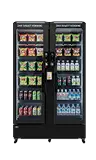
QINGO PAIR 1208: Dual-Door Configuration
The PAIR 1208 features a dual-door design and a large-capacity cabinet for locations that require a wider product selection or higher-volume supply.
Potential applications include:
- Transportation hubs
- Airports
- Large corporate campuses
Actual loading capacity depends on the product assortment and loading configuration. Consult the latest confirmed product specifications for the applicable capacity.
When comparing QINGO models, operators should consider more than cabinet volume alone. Product dimensions, shelf layout, replenishment frequency, payment requirements, and available installation space all affect which configuration is most suitable.
End-to-End Smart Vending Solutions: Software & Telemetry
Vending machine hardware provides the physical shopping experience, while software and remote management tools help operators manage day-to-day activities. QINGO’s smart vending solutions connect vending hardware with cloud-based management capabilities and operator tools.
Real-Time Inventory Tracking
Operators can use available management tools to monitor product inventory and identify which items may need replenishment, helping them plan restocking activities more efficiently.
Restock Alerts and Route Planning
Inventory information can help operators prepare products before visiting a machine. By planning restocking activities around actual needs, operators can work toward reducing unnecessary service trips.
Remote Temperature and Lighting Management
Where supported by the machine configuration and management system, remote monitoring tools can help operators review operating conditions and identify issues that may require attention.
Temperature monitoring is particularly relevant when machines store chilled beverages or packaged food that requires refrigeration.
Sales Analytics and Promotional Management
Sales reports and operational data can help operators:
- Review purchasing patterns
- Identify busy periods
- Make informed product assortment decisions
- Plan promotions based on sales performance
Available functions depend on the software platform and machine configuration.
Have questions about security, age verification, or payment gateway setup? Read our Top 10 AI Vending Machine FAQs for answers to common operator questions.
Business Impact: Why Operators and Distributors Consider QINGO
Choosing an AI vending machine involves more than comparing equipment prices. Operators and distributors also need to consider product flexibility, maintenance requirements, payment options, and the work involved in managing multiple locations. For an overview of the factors that can affect purchasing budgets, read our AI Vending Machine Cost Guide.
For businesses planning private-label equipment or tailored configurations, QINGO’s OEM and ODM Vending Machine Guide provides additional information about customization options.
QINGO’s vending solutions offer several potential operational benefits.
Flexible Product Selection
The grab-and-go format allows customers to view and handle products before completing a purchase. Depending on the machine configuration, this can support a variety of suitable products and help operators tailor their assortment to the needs of each location.
Simplified Mechanical Design
Machines that do not rely on traditional dispensing coils and pushers avoid the need to maintain those specific mechanical components. Overall maintenance requirements still depend on the machine, operating environment, usage, and service conditions.
AI-Powered Product Recognition
Computer vision-based recognition can support product identification without requiring an individual RFID tag on every item. This may simplify product preparation for operators, depending on the system configuration and product requirements.
More Flexible Product Assortments
Different machine configurations can accommodate different product types and sizes. Operators can evaluate options such as:
- Chilled beverages
- Suitable packaged foods
- Other products compatible with the machine’s storage and shelf configuration
Product selection should take into account storage conditions, shelf dimensions, product packaging, and the needs of the target location.
Remote Operational Visibility
Cloud-based management tools can help operators review inventory, sales, and machine information remotely where these features are supported. This can be particularly useful for businesses managing multiple vending locations.
Actual business results depend on location, customer demand, product pricing, operating costs, restocking schedules, and machine configuration. Operators should assess these factors when estimating the potential return on their investment.
Supporting the Future of Smart Retail
So, what is QINGO? QINGO provides AI vending machines and smart retail solutions that combine vending hardware, AI-powered product recognition, and cloud-based management capabilities.
By bringing together these technologies, QINGO helps businesses explore more flexible approaches to unattended retail. Its range of vending machine configurations can support different commercial environments, while its management capabilities can help operators monitor and organize daily operations.
For business owners, vending operators, distributors, and commercial property managers considering an upgrade from traditional vending equipment, QINGO offers options to evaluate according to their:
- Available space
- Product assortment
- Payment requirements
- Business objectives
Ready to explore your options for automated retail? Discover QINGO’s AI vending machine and distributor solutions to find a configuration that fits your business needs.