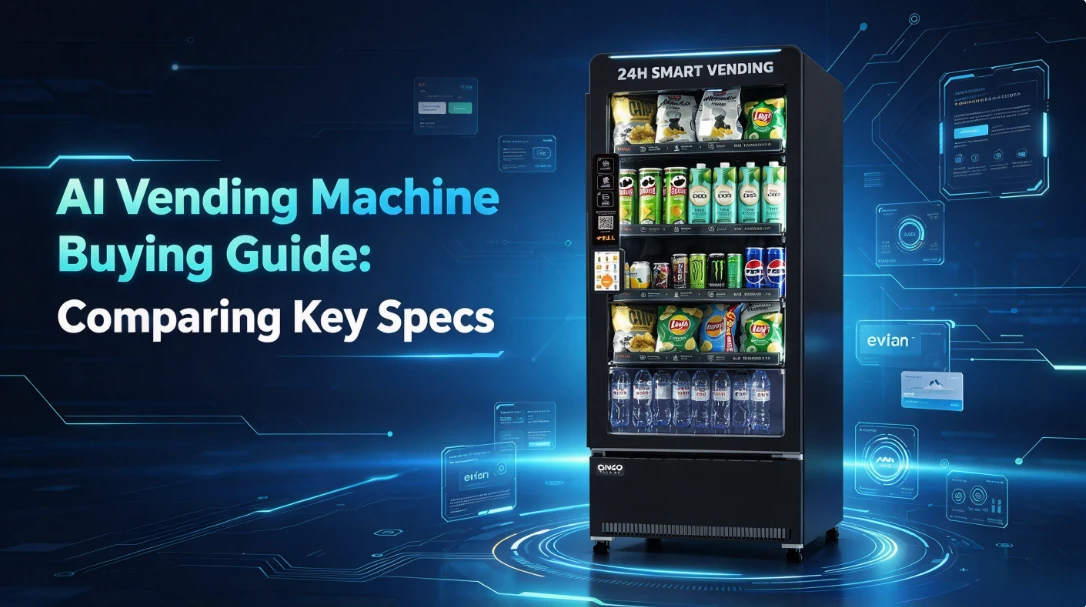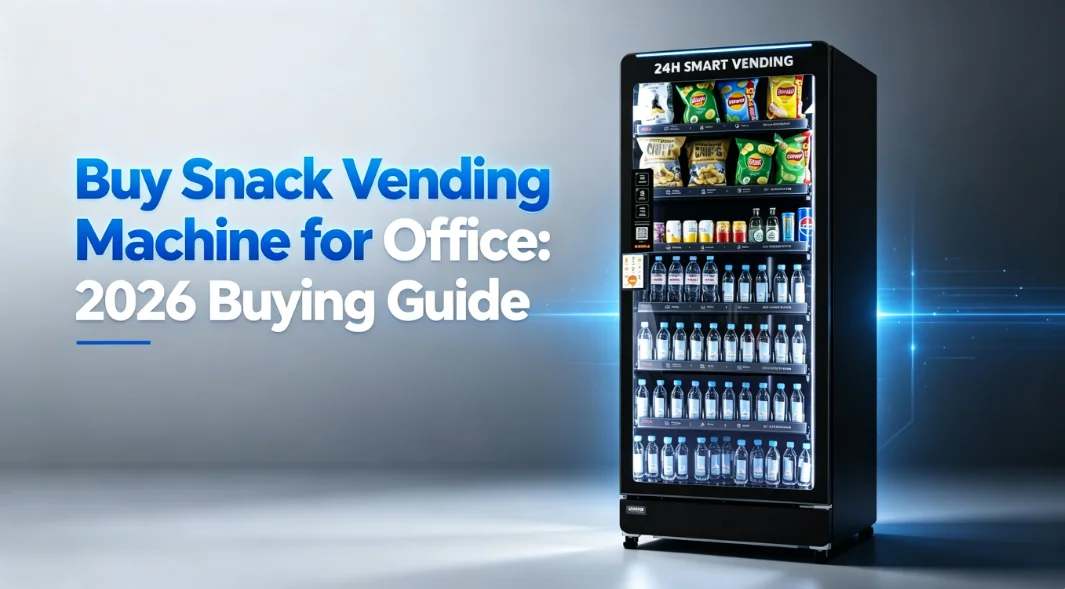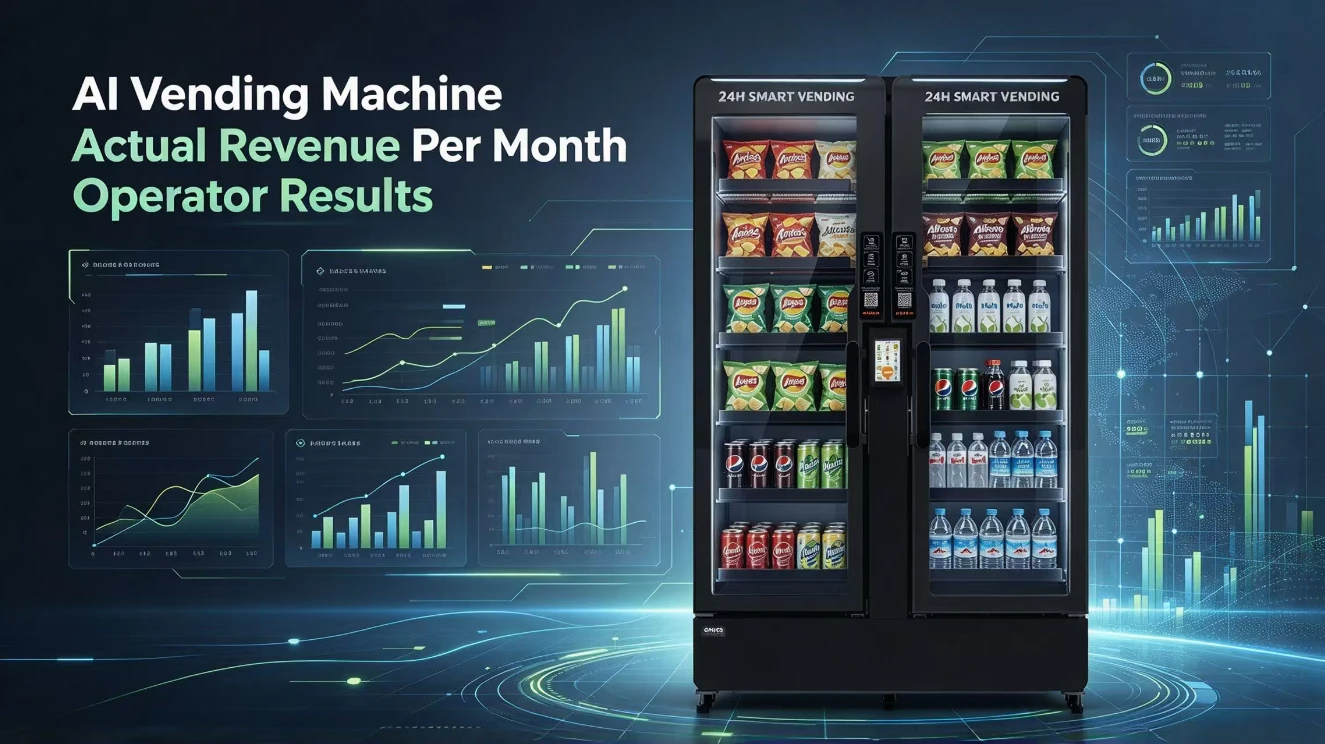
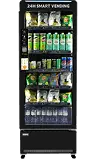
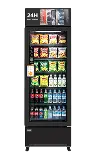
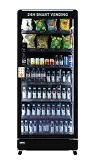
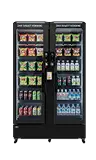
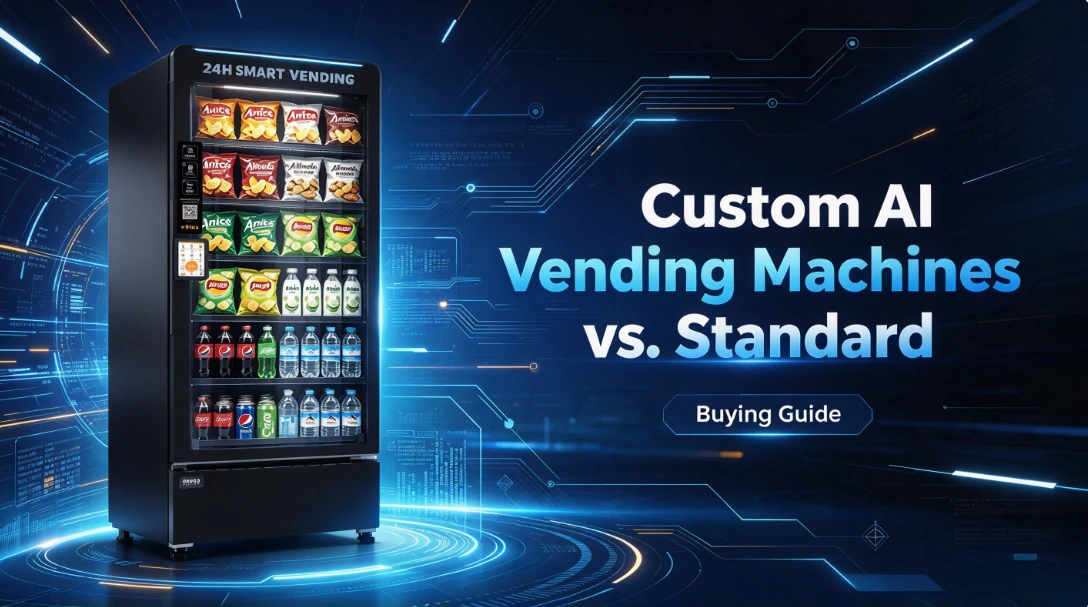
When expanding an unattended retail business, you must decide whether to deploy a standard off-the-shelf unit or invest in custom AI vending machines. This decision directly impacts your procurement budget, deployment speed, and ongoing maintenance.
This guide breaks down the core differences in appearance, size, functionality, and cost. We will help you evaluate your operational needs and choose the most profitable hardware strategy.
Key Feature Considerations
- Appearance and Size Flexibility
Standard machines come in fixed dimensions. Manufacturers optimize these sizes to fit conventional spaces like corporate offices, gyms, and university campuses. Custom AI vending machines allow you to alter the physical footprint. You can build cabinets to fit tight architectural constraints or unique retail environments.
- Hardware and Dispensing Functionality
Standard units typically rely on traditional coils, standard smart fridge shelves, or simple locker doors. Custom builds integrate specialized hardware tailored to your business model. For example, you might add hardware scan-to-redeem modules for loyalty programs or specific elevator belts for fragile items.
- Software and Integration Capabilities
Most standard AI machines include a robust cloud-based SaaS platform. These platforms handle real-time inventory tracking and remote diagnostics. However, some operators require independent software function customization. If you need deep API integrations with corporate payment systems or tailored touchscreens, you will likely need a custom software solution.
- Product Adaptation Limits
Standard trays and shelves work perfectly for conventional beverages and snacks. If you sell niche products with unusual shapes or heavy weights, you face a different challenge. Forcing oversized items into standard coils causes jams and product damage. Customizing the internal dispensing mechanism ensures a seamless buying experience.
Procurement Cost Factors
Evaluating the cost difference is crucial for maintaining a healthy return on investment.
A standard AI vending machine or smart fridge usually costs between $1,800 and $3,000+. Manufacturers produce these units in high volumes, which keeps the price low and ensures replacement parts remain affordable.
Highly tailored or semi-custom vending machines often range from $6,000 to $12,000, and complex robotic builds can exceed $25,000. If you engineer a new enclosure from scratch, factories usually charge a one-time development fee equivalent to the price of several machines.
Selection Guide: Standard vs Custom
Use this comparison table to evaluate your hardware requirements quickly.
| Feature | Standard AI Vending Machine | Custom AI Vending Machines |
| Procurement Cost | Low ($1,800 – $3,000+) | High ($6,000 – $25,000+) |
| Deployment Time | Fast (7 to 10 days) | Slow (30 to 90+ days) |
| Product Adaptation | Limited to standard shapes | Built for exact specifications |
| Software Features | Unified cloud SaaS | Deep API & custom UI options |
| Maintenance | Simple, standard parts | Requires specialized support |
Strategic Recommendation
For the vast majority of distributors and operators, standard equipment delivers the fastest payback period and lowest operational risk. Custom hardware only makes financial sense when your unique product absolutely cannot dispense through standard mechanisms.
If your primary goal is brand visibility, you do not need an expensive mechanical redesign. Qingo supports high-quality exterior sticker customization without changing the core hardware standards of the machine. This allows you to achieve a completely unique brand identity while enjoying the low procurement cost and reliability of a standard AI vending machine.
Read More About AI Vending Machine
What Is an AI Vending Machine? A Complete Industry Guide
FAQ
- How much does a custom AI vending machine cost?
A highly configured or branded custom vending machine usually costs between $6,000 and $12,000. Complex robotic machines or fully engineered cabinets carry much higher development fees. - Can I use standard vending machines for fragile products?
Using traditional coil mechanisms for fragile products increases the risk of damage. You should choose standard machines equipped with elevator belts or consider a custom dispensing solution. - What software features require custom development?
Operators need independent software function customization when they require specific API integrations. Custom corporate payment gateways and tailored interactive touchscreens also demand custom development. - Does custom branding require a fully custom machine?
No. You can easily apply custom vinyl wraps and 3D stickers to a standard AI vending machine enclosure. This approach creates a unique brand identity at a fraction of the cost. - When should I choose custom AI vending machines over standard ones?
You should invest in custom machines only when your product dimensions fail to fit standard trays. Custom units also make sense when your location demands a completely unique structural design.