Entrepreneurs frequently want to know the financial realities of modern automated retail. Understanding AI vending machine actual revenue per month operator results requires looking beyond basic sales numbers. The integration of artificial intelligence, vision recognition, and real-time data analytics transforms traditional vending into a highly efficient business model.
This article breaks down the primary factors influencing monthly revenue and provides concrete profitability estimates across different deployment scenarios using specific Qingo models.
Business Opportunity
Modern AI vending machines offer superior business opportunities compared to traditional models. Smart vision recognition systems allow operators to sell diverse products, from fresh meals to premium electronics, without the limitations of traditional spiral coils.
These technological upgrades directly impact the bottom line. Operators can monitor inventory remotely, reduce unnecessary maintenance trips, and optimize product mix based on real-time consumer data.
Revenue Factors
Several critical variables determine the financial success of any vending deployment. Understanding these elements helps operators accurately project their earnings.
- Foot Traffic: The total number of potential customers walking past the machine daily sets the baseline for sales.
- Purchase Rate: This metric indicates what percentage of foot traffic actually buys a product. High-need environments usually see stronger purchase rates.
- Average Transaction Value: AI machines support multi-item purchases and higher-priced goods, which naturally increases the average cart size.
- Gross Margin: Sourcing costs and retail pricing dictate the profit margin per item. Strategic product selection protects this margin.
Cost Factors
Revenue only tells half the story. Operators must manage specific operational expenses to maximize profitability.
- Machine Investment: Leasing or amortizing the hardware cost over time impacts monthly cash flow.
- Restocking Logistics: Fuel, labor, and time spent refilling machines represent significant recurring costs.
- Location Commissions: Many high-traffic venues require a percentage of sales or a flat monthly fee for hosting the machine.
- Maintenance and Software: Fees for AI analytics platforms, payment gateways, and routine hardware upkeep reduce net income.
Operational Considerations
Deploying the right machine in the right location minimizes operational friction. A compact machine in a bustling airport requires constant refilling, wiping out profits through labor costs.
Conversely, placing a massive dual-door model in a small office wastes electricity and capital. Operators must match the machine’s capacity and features to the specific demands of the venue.
ROI Analysis: Scenarios and Estimated Profits
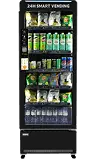
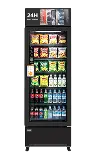
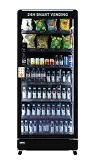
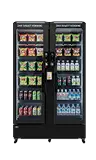
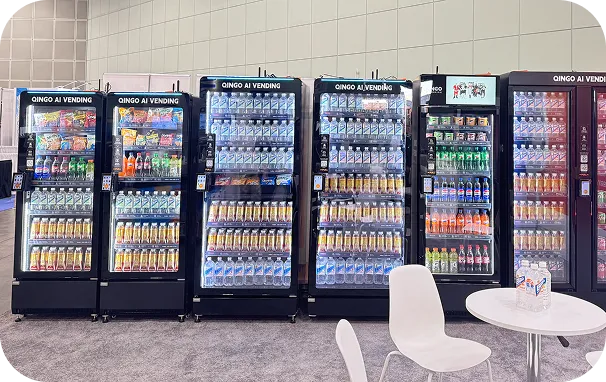
Using targeted equipment like the Qingo Ten 409, Ace 779, or Pair 1208 ensures that operational capabilities align with venue requirements. Below are estimated monthly profit results based on typical performance metrics for Qingo AI vending machines across various industries.
| Deployment Scenario | Recommended Model | Daily Foot Traffic | Avg. Transaction | Estimated Monthly Profit |
| School Campus | Qingo Ace 779 | 500 | $4.00 | $3,600 |
| Transportation Hub | Qingo Pair 1208 | 1,000 | $7.00 | $1,890 |
| Manufacturing Plant | Qingo Ace 779 | 150 | $6.00 | $1,823 |
| Hospital | Qingo Pair 1208 | 500 | $8.00 | $1,620 |
| Office Building | Qingo Ten 409 | 100 | $6.00 | $1,215 |
| Hotel | Qingo King 509 | 100 | $9.00 | $945 |
Note: These profit estimates reflect specific purchase rates and gross margins tailored to each environment.
Conclusion
Reviewing AI vending machine actual revenue per month operator results shows that profitability relies heavily on strategic deployment. Operators who successfully match machine capacity to location demand achieve faster payback periods.
By leveraging advanced analytics and targeted hardware solutions, vending businesses can scale efficiently while maintaining strong profit margins.
FAQ
- How much do vending machines make a month?
The revenue depends entirely on location and equipment. An AI vending machine in a small office might generate around $1,200 in monthly profit, while high-traffic school deployments can exceed $3,600 per month. - What affects the daily sales of an AI vending machine?
Foot traffic and the venue’s purchase rate are the primary drivers. Additionally, offering relevant products that match consumer needs increases both the transaction value and overall daily sales. - Why do operators choose the Qingo Ten 409 for offices?
The Qingo Ten 409 features a compact footprint and low-noise operation. It perfectly handles the typical daily foot traffic of 100 people without taking up excessive space. - How does AI technology reduce operating costs?
AI systems use real-time data to track inventory and predict when a machine needs restocking. This eliminates unnecessary trips, reducing labor and fuel expenses for the operator. - Are dual-door machines more profitable?
Dual-door models like the Qingo Pair 1208 hold more inventory and process faster checkouts. They capture more sales during peak hours in high-volume locations like hospitals and transit hubs.