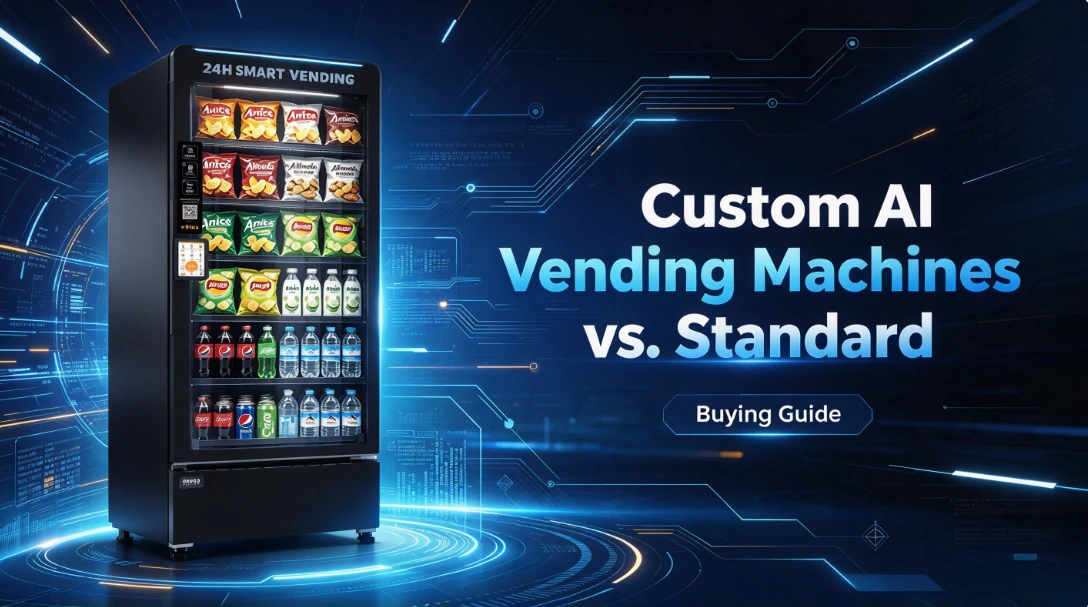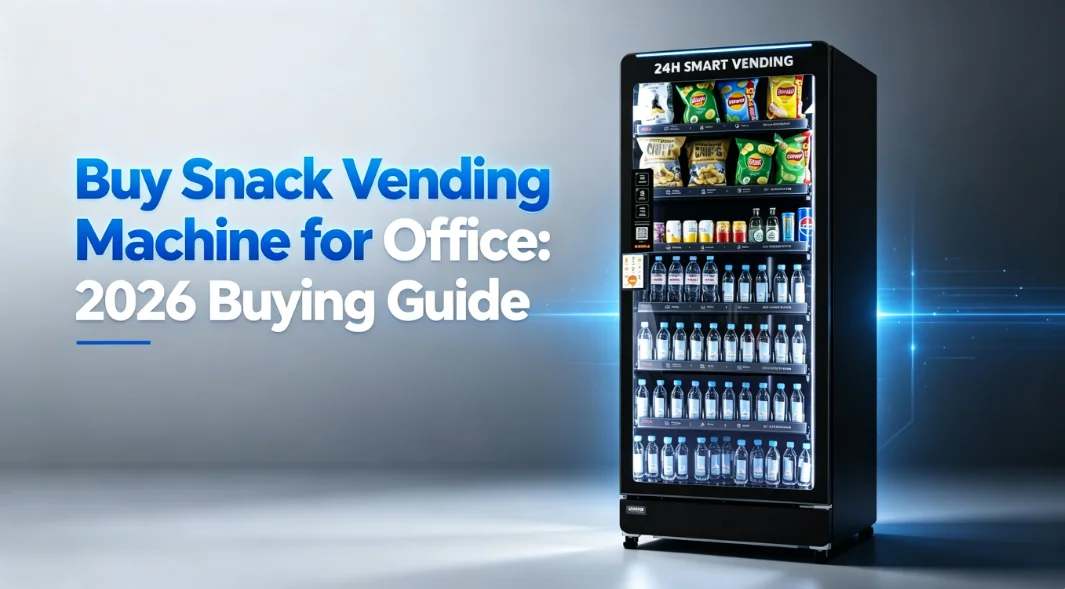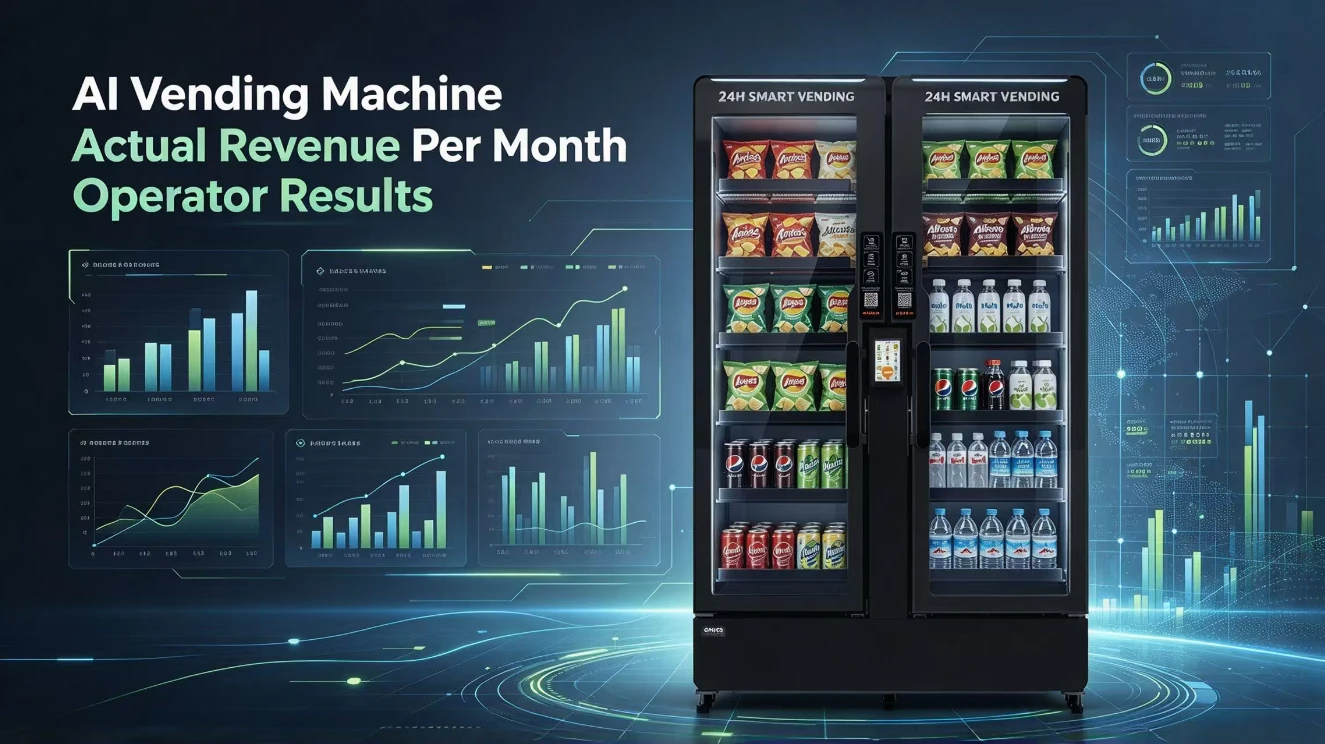
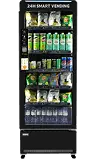
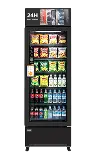
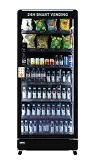
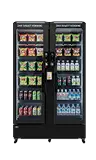
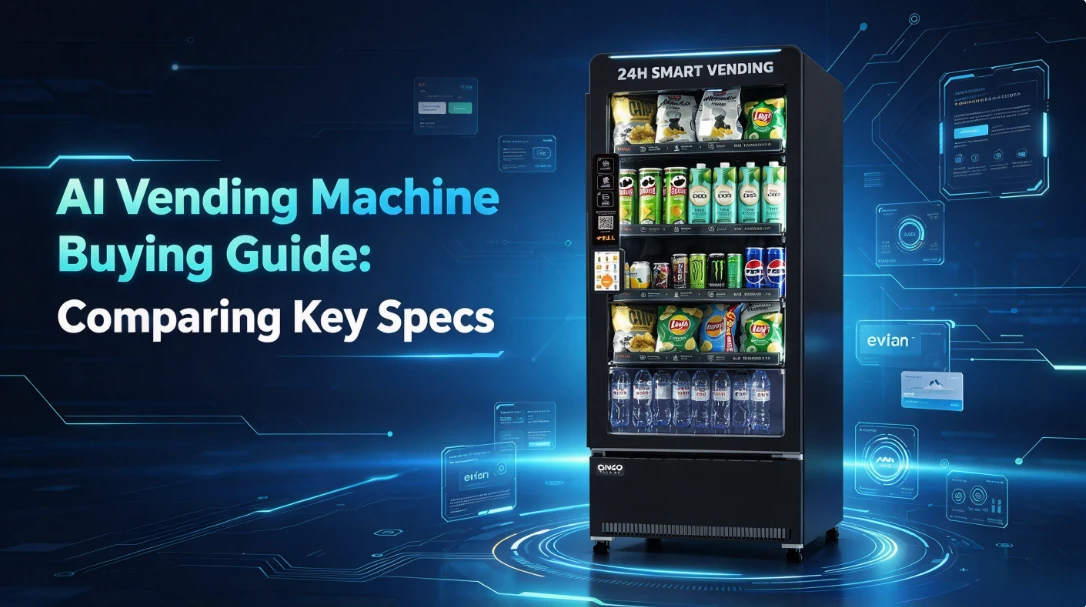
Buying an AI vending machine represents a strategic investment for any business operator. Buyers often face a mountain of hardware specifications. Understanding how these elements affect daily operations remains critical for maximizing your return on investment. This guide breaks down essential hardware specifications and explains how standardizing premium features simplifies the buying process.
Key Specifications to Compare
When evaluating equipment options, you need to understand the practical business value of each configuration.
- Size and Capacity: The physical dimensions dictate where you can place the machine. High-traffic locations often have strict space limitations. Meanwhile, internal capacity determines how much inventory you can hold. Higher capacity reduces restocking trips, directly lowering your labor costs.
- Screen and User Interface: Modern machines feature various screen sizes. A larger touch screen offers better opportunities for digital advertising and creates a smoother customer checkout experience.
- Product Recognition System: AI vending relies on computer vision, weight sensors, or RFID. Visual recognition combined with weight sensing represents the industry gold standard. This technology allows customers to grab multiple items without barcode scanning.
- Cooling Configurations: Depending on your inventory, you may need ambient, refrigerated, or dual-zone cooling. High-quality compressors ensure energy efficiency. This remains vital since cooling accounts for a significant portion of operating electricity costs.
- Network Connectivity: AI systems require stable internet for real-time telemetry, payment processing, and inventory tracking. Options usually include WiFi, 4G/5G, or Dual SIM setups to prevent operational downtime.
The Qingo Approach: Simplifying Your Purchase
Many manufacturers treat advanced technology as optional add-ons. This strategy forces buyers to pay extra for essential functions. Qingo takes a completely different approach. The company ensures all advanced hardware functions as standard equipment across its models.
- Visual Recognition: This technology comes standard on all units, ensuring seamless multi-item transactions.
- Network Reliability: Dual SIM and WiFi connectivity come built-in, eliminating offline risks.
- Advanced Hardware: Smooth product delivery thrusters and pushers act as standard equipment, preventing stuck items and enhancing the user experience.
The Only Two Factors You Need to Consider
Because Qingo standardizes the critical technology, the biggest hardware difference among various models is simply the machine volume. Your purchasing decision comes down to two practical business factors:
- Available Placement Space: Measure the physical footprint of your secured location. If you place a machine in a tight office corridor, a compact model works best. If you have a large cafeteria, a wider model maximizes visibility.
- Expected Sales Volume: Estimate the daily foot traffic and product turnover. High-volume locations require machines with larger internal capacity. This minimizes restocking frequency and maximizes your daily revenue.
Site Survey Checklist
Before finalizing your purchase, run through this quick checklist to ensure seamless deployment:
- Measure the exact width, depth, and height of the installation site.
- Assess the daily foot traffic to determine the necessary inventory capacity.
- Confirm standard power outlets are available for the cooling system.
- Verify cellular or WiFi signal strength at the location.
Summary
Comparing AI vending machine specifications usually involves analyzing screens, sensors, and cooling systems. By choosing a manufacturer that standardizes premium features, you eliminate the risk of buying outdated technology. Your focus can then shift to what truly matters for your business. You only need to fit the machine into your location and hold enough inventory to meet customer demand.
Read More About AI Vending Machine
What Is an AI Vending Machine? A Complete Industry Guide
FAQ
- How do cooling configurations impact energy consumption?
Cooling systems account for a large portion of a vending machine’s energy use. Energy-efficient compressors and smart temperature controls significantly reduce daily electricity costs. - Does internal capacity affect my operating costs?
Yes, larger internal capacity directly reduces your labor expenses. Machines that hold more inventory require fewer weekly visits from your route drivers for restocking. - Do I need to pay extra for visual recognition technology?
Many brands charge extra for advanced sensors, but Qingo includes visual recognition as a standard feature on all models. This ensures you get top-tier technology without hidden upgrade fees. - Why is dual network connectivity necessary?
AI vending machines cannot process payments or update inventory data without an internet connection. Dual SIM and WiFi capabilities prevent revenue loss during unexpected network outages. - What is the most important spec in an AI vending machine?
Once a manufacturer standardizes premium technology, physical size becomes your most important specification. You must choose dimensions that fit your location while maximizing product capacity.