
When starting a vending machine business, most new operators focus on two things: which machine to buy and where to place it. While these are critical, a third challenge arises immediately after installation: What products should you stock?
Many beginners assume the answer is simple: “Just load up on common drinks, snacks, and instant noodles.”
However, after a few months of operation, reality often hits hard:
- Some obvious best-sellers don’t move at all.
- High-margin items sit untouched because the price is too high.
- Products that sold well initially suddenly slow down.
- Items with decent profits end up expiring, occupying valuable slots, and tying up capital.
The core issue isn’t the machine; it’s the strategy. You aren’t just “stocking shelves”; you are effectively “gambling on inventory.”
Successful vending isn’t about guessing what you like. It’s about understanding scenarios, target demographics, price points, and turnover efficiency. In this guide, we’ll break down the core logic of vending machine product selection and expose the 8 most common pitfalls new operators fall into.
The Golden Rule: Stock What Users Buy on Impulse, Not What You Want to Sell
This is the most important principle. New operators often choose products based on:
- Personal preference (“I love this drink.”)
- Current trends (“This brand is viral online.”)
- High profit margins.
- Attractive packaging.
While these factors matter, they are not the core drivers.
The Difference Between Vending and Retail:
In a supermarket, customers browse, compare, and deliberate. In vending, the consumer behavior is defined by:
- Impulse: “I want it now.”
- Convenience: “I’ll grab the closest one.”
- Speed: Quick decision-making.
- Low Cognitive Load: No time to research.
Therefore, the best vending products share these traits:
- Low Cognitive Cost: Users instantly know what it is.
- Low Decision Cost: No hesitation needed.
- Immediate Need: Thirst, hunger, or urgency.
- Clear Price Acceptance: The price feels fair for the convenience.
- High Repurchase Potential: It’s a habit, not a one-time experiment.
Selection isn’t about “Is this a good product?” It’s about “Does this fit the vending scenario?”
Top 5 Categories That Sell Best in Vending Machines
While specific SKUs vary by location, successful machines generally cater to these five core needs:
1. Hydration (The Foundation)
The most stable, baseline demand.
- Examples: Bottled water, tea, carbonated soft drinks, juice, sports drinks.
- Why: Thirst is the most immediate and natural trigger for a purchase.
2. Energy & Focus (High Margin)
Ideal for offices, night shifts, factories, hospitals, and study zones.
- Examples: Coffee (RTD), energy drinks, sugar-free teas, functional beverages.
- Why: Users are willing to pay a premium for a quick boost.
3. Hunger Relief (Snacking)
Perfect for overtime work, late nights, waiting areas, and dorms.
- Examples: Small-pack snacks, cookies, bread bars, chocolate, instant noodles (if equipment allows).
- Why: Solves immediate hunger when cafeterias are closed.
4. Emergency Essentials (Scenario-Specific)
Not for every machine, but highly profitable in the right spot.
- Examples: Tissues, masks, wet wipes, feminine hygiene products, umbrellas.
- Best Locations: Hospitals, transit hubs, schools, residential communities.
5. Seasonal & Contextual Items
Fine-tuning based on time and place.
- Summer: Ice-cold drinks, cooling mints.
- Winter: Warm beverages (if equipped with heating).
- Offices: Low-sugar, premium, functional drinks.
- Factories: High-value, large-format drinks for the price.
Key Takeaway: The “best seller” isn’t a fixed product; it’s the product that matches the specific need of that specific location.
Think in “Product Structure,” Not Just Single SKUs
Novices ask: “Which single item sells best?”
Pros ask: “How do I structure the entire machine for maximum efficiency?”
Pros ask: “How do I structure the entire machine for maximum efficiency?”
A healthy machine relies on a mix of four product roles:
- Traffic Drivers (Loss Leaders):
- Role: Get the customer to stop and buy.
- Traits: High recognition, stable demand, transparent pricing (e.g., Water, Classic Coke).
- Goal: Initiate the transaction.
- Volume Movers (The Backbone):
- Role: Consistent daily sales.
- Traits: Stable turnover, high repurchase rate.
- Goal: Sustain revenue.
- Profit Generators:
- Role: Boost overall margin.
- Traits: Higher unit profit, niche appeal (e.g., Premium Energy Drinks, Imported Snacks).
- Goal: Maximize profitability.
- Test Pilots:
- Role: Gauge local preference.
- Traits: Small quantity, data-driven retention.
- Warning: Never make these your main inventory.
The 8 Biggest Product Selection Mistakes New Operators Make
Mistake #1: Relying on Gut Feeling
“I think this will sell” or “My friend said this is hot.”
Vending is about scenario conversion, not personal taste. What sells in a gym won’t sell in a library.
Vending is about scenario conversion, not personal taste. What sells in a gym won’t sell in a library.
- Fix: Analyze the demographic first, then design the mix, then validate with data.
Mistake #2: Chasing High Margins, Ignoring Turnover
A product with a $2.00 profit that sells once a month is worse than a product with $0.50 profit that sells ten times a day.
- The Trap: High margin items occupy slots, tie up cash, and risk expiration.
- Fix: Optimize for Revenue Per Slot, not just Margin Per Unit.
Mistake #3: Overloading Variety (SKU Clutter)
More choices ≠ More sales. In vending, too many options cause decision paralysis.
- The Trap: Users can’t find what they want quickly, so they walk away. Restocking becomes a nightmare.
- Fix: Focus on hitting the high-frequency needs hard. Keep the lineup tight and relevant.
Mistake #4: Blindly Chasing “Viral” Products
Just because a drink is trending on TikTok doesn’t mean it fits a vending machine.
- The Trap: High cognitive cost (users don’t know what it is), price resistance, and unstable supply chains.
- Fix: Use viral items only as small-scale tests, never as core inventory.
Mistake #5: Ignoring Price Tiering
Don’t fill the machine with only cheap items (low profit) or only expensive items (low conversion).
- The Fix: Create a balanced pyramid:
- Base Tier: Affordable, high volume (e.g., Water).
- Middle Tier: Standard pricing, main sellers (e.g., Soda).
- Premium Tier: Higher price, higher margin (e.g., Cold Brew Coffee).
Mistake #6: Underestimating Shelf Life & Damage Risk
Vending machines are harsh environments.
- The Trap: Short-shelf-life bakery items, temperature-sensitive chocolates, or fragile packaging that jams the coil.
- Fix: Choose products with robust packaging, stable shelf lives, and proven compatibility with your machine’s mechanism.
Mistake #7: “Set It and Forget It”
Stocking the machine once and waiting two months is a recipe for failure.
- The Fix: Treat selection as a continuous loop. Monitor data weekly:
- Which SKUs are dead weight? Remove them.
- Which prices are converting best? Adjust them.
- Is the season changing? Rotate the mix.
Mistake #8: Copying Someone Else’s “Winning List”
“What sells best in your school?”
Copying a successful list from a different location is dangerous. A hospital has different needs than a factory; a winter mix fails in summer.
Copying a successful list from a different location is dangerous. A hospital has different needs than a factory; a winter mix fails in summer.
- Fix: Borrow the strategy, not the SKU list. Let your own location’s data dictate your inventory.
A Safe Starting Strategy for Beginners
If you are just starting, don’t try to be perfect. Aim for stability:
- Start with High-Recognition Basics: Secure your baseline sales with water and top-brand sodas.
- Add a Few High-Margin Items: Introduce 2-3 premium options to lift profits.
- Reserve Slots for Testing: Dedicate 10-15% of your machine to experimenting with new items.
- Prioritize Supply Stability: Stick to products that are easy to restock and won’t spoil quickly.
- Customize by Scenario: Never use the exact same plan for every machine.
Final Thoughts: Selection is About Efficiency, Not Luck
There is no universal “Magic Bullet” product list. Success depends on:
- Understanding your Scenario.
- Analyzing Turnover Data.
- Managing Inventory Turnover.
- Iterating based on Feedback.
Vending success isn’t about finding one hit product; it’s about building a system that continuously optimizes itself. Do this right, and your inventory will become a precision engine for profit. Get it wrong, and you’re just holding expensive stock.
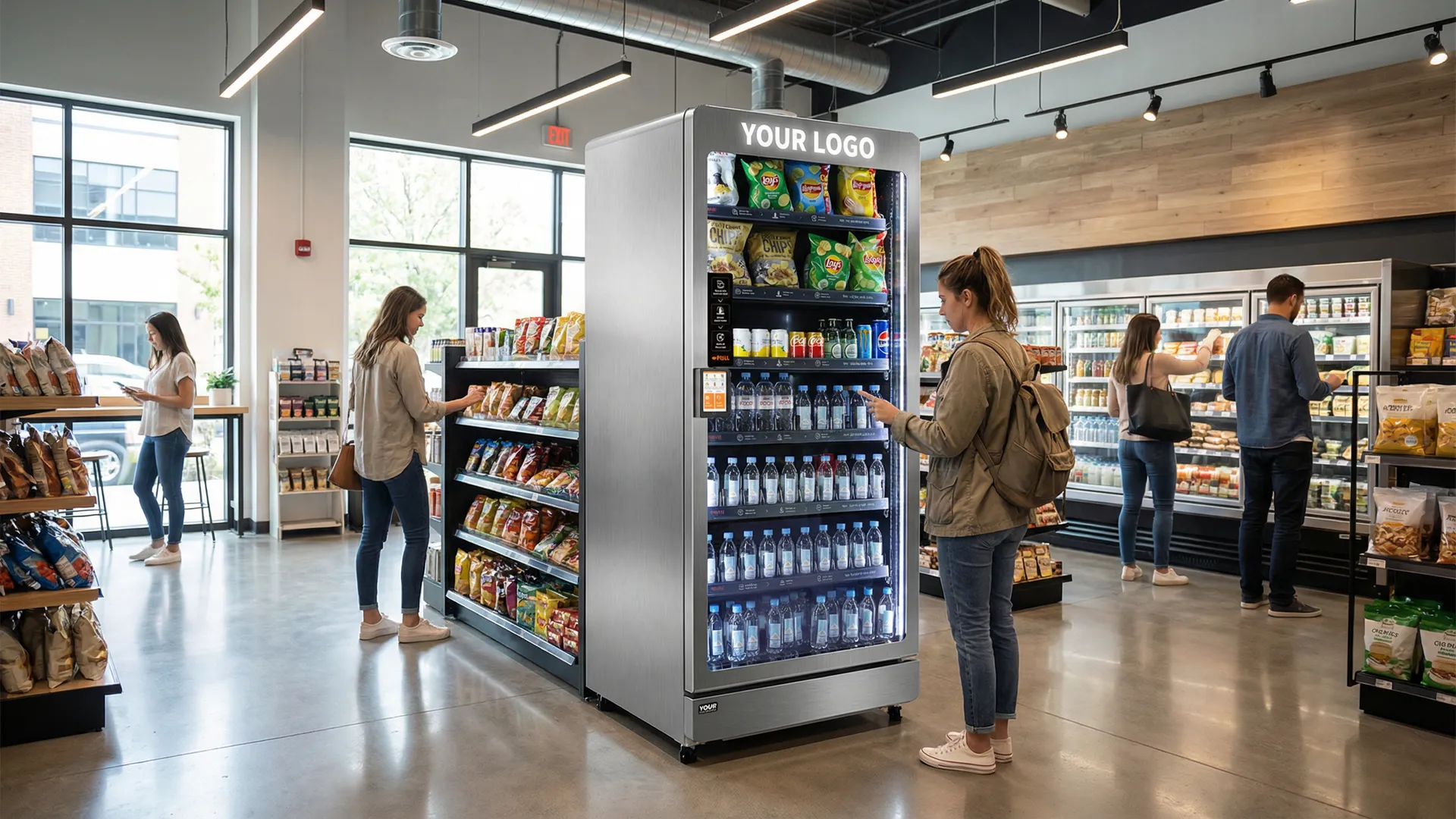
Are you struggling with product selection?
Whether it’s balancing your drink mix, choosing the right snacks, or setting the perfect price points, feel free to leave a comment below or contact our team. We can help you build a data-driven product strategy tailored to your specific locations.
Ready to innovate?
👉 Contact Qingo Today for a consultation on your custom project.
🌐 Visit www.qingo.com or call +1 (626) 879-5455.
🛒 Prefer to browse? Check out our Amazon Store for ready-to-ship units.
(Published by [Qingo LLC] – Empowering Smart Vending Operations)
QUICK ENQUIRY
·
QUICK ENQUIRY
·
QUICK ENQUIRY
·
QUICK ENQUIRY
·
QUICK ENQUIRY
·
QUICK ENQUIRY
·
QUICK ENQUIRY
·
QUICK ENQUIRY
·
QUICK ENQUIRY
·
QUICK ENQUIRY
·