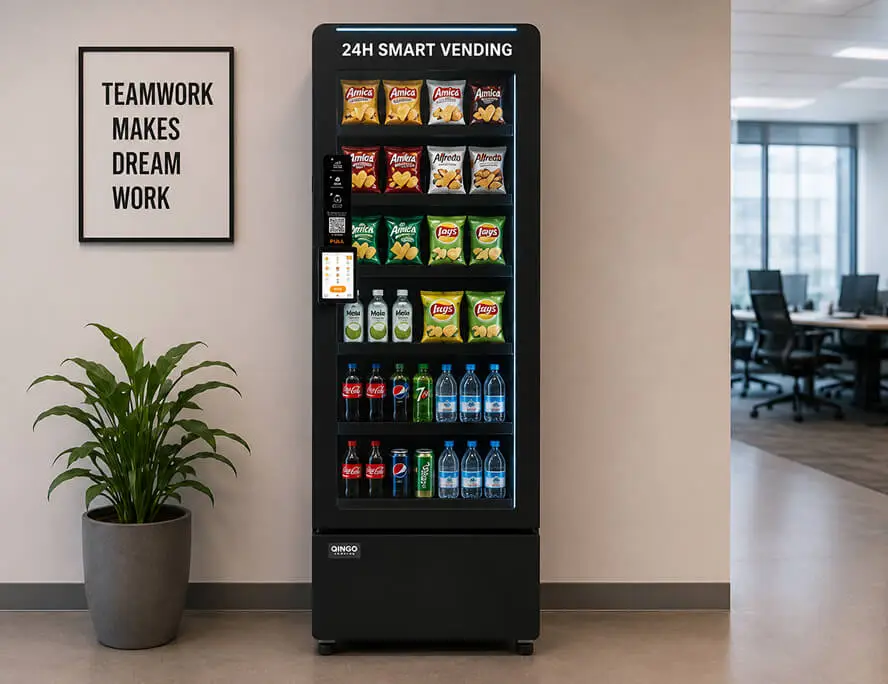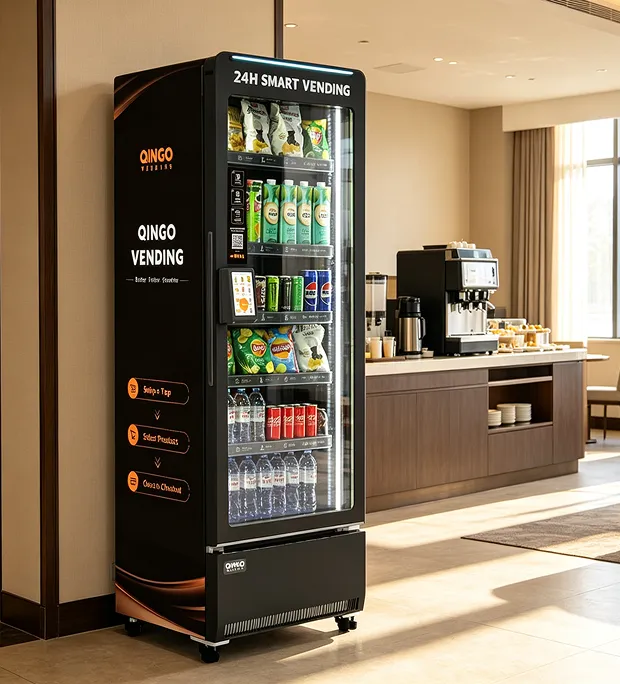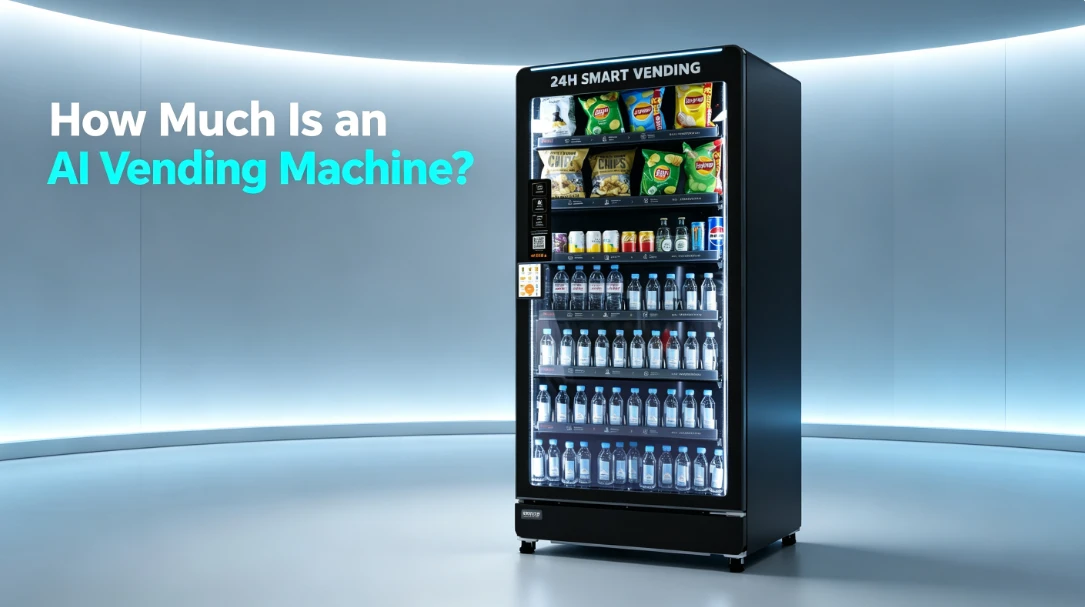
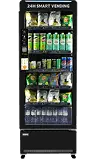
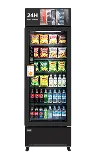
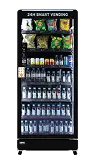
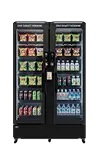
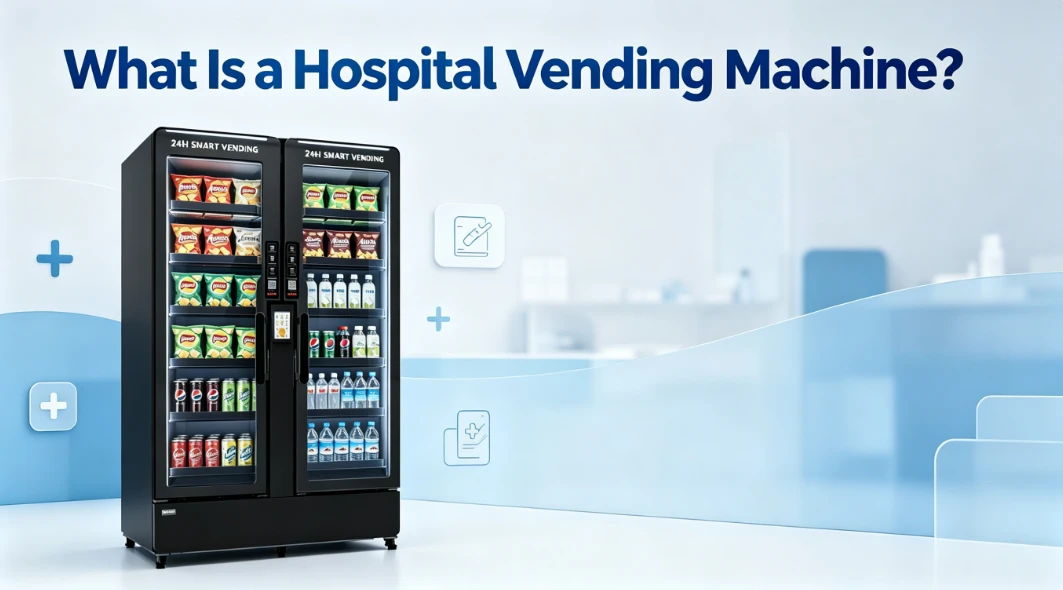
Hospitals operate around the clock. This continuous activity creates a steady demand for food, beverages, and essential supplies. A hospital vending machine provides a reliable unattended retail solution for this fast-paced environment.
For operators and distributors, placing a vending machine in hospital settings presents a highly profitable opportunity. High daily foot traffic and 24-hour purchasing needs translate into strong revenue potential.
What Makes Healthcare Vending Unique?
A standard snack dispenser often fails to meet complex healthcare demands. A vending machine at hospital facilities must cater to diverse groups, including patients, visiting families, and medical staff.
These environments require specialized machines capable of holding various items. Operators must supply everything from fresh meals and healthy snacks to over-the-counter (OTC) medications and personal protective equipment (PPE).
Data supports this growing trend. In North America alone, the medical vending sector reached USD 428 million in 2025, with healthcare applications projected to grow 10.57% annually.
Core Equipment Types and Features
Modern unattended retail technology transforms how operators manage healthcare locations. When selecting equipment, business owners should prioritize specific hardware and software capabilities.
- High-Capacity Dual-Door Models
Facilities with high traffic require machines that hold more inventory. Dual-door designs, such as the Qingo Pair 1208, allow faster shopping during busy shifts.
This large capacity directly reduces replenishment frequency. Operators spend less time restocking while maintaining a continuous supply of products for customers.
- AI Vision and Remote Monitoring
Artificial intelligence dramatically improves operational efficiency. AI vision recognition ensures fast and accurate product identification for seamless transactions.
Remote monitoring systems allow operators to track inventory levels in real time. This technology turns raw data into actionable business analytics, reducing unnecessary maintenance visits.
- Smart Cashless Payment Systems
Hygiene remains a top priority in medical centers. Cashless payment options reduce physical contact and speed up the purchasing process. Consumers frequently expect tap-to-pay, mobile wallets, and RFID card integrations.
Optimal Deployment Scenarios
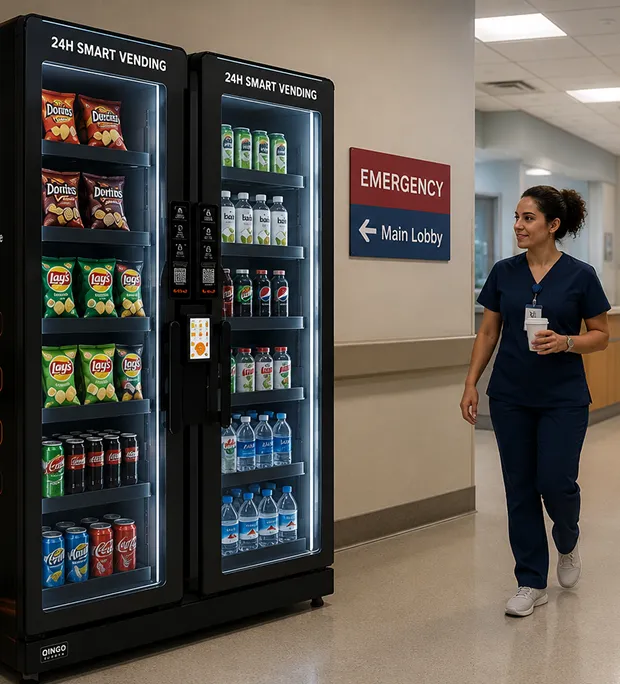
Strategic placement dictates the success of a vending machine for hospital environments. Different locations within a facility serve distinct user needs.
- Emergency Rooms (ER)ERs experience 24-hour traffic. Visitors often endure long waits and need immediate access to comfort foods, hydration, and phone chargers.
- Staff Breakrooms: Doctors and nurses work grueling shifts. They require healthy meals, protein snacks, and premium coffee when cafeterias close.
- Main Lobbies: High-visibility areas suit machines dispensing daily essentials, gifts, and premium beverages for general visitors.
- Pharmacy Outskirts: Specialized machines can dispense OTC medications and PPE, easing front-desk congestion and improving compliance.
Operational Advantages for Businesses
Investing in healthcare unattended retail offers compelling benefits for distributors and route operators.
- Continuous Revenue Stream: Unlike office buildings with set hours, medical facilities generate sales day and night.
- Higher Transaction Values: Consumers in these settings frequently purchase premium healthy meals or essential medical supplies, increasing the average transaction value.
- Lower Operating Costs: AI-powered inventory control minimizes route frequency. Operators dispatch drivers primarily when machines actually need restocking.
- Scalability: Operators can easily expand from a single lobby machine to a campus-wide network using unified software platforms.
Summary
Deploying a hospital vending machine provides immense value for modern operators. By matching high-capacity, AI-driven equipment with strategic locations, businesses can capture continuous demand. This approach delivers essential convenience to healthcare workers and visitors while ensuring strong business growth.
FAQ
- What items sell best in a hospital vending machine?
A hospital vending machine typically performs best when stocked with healthy meals, hydration options, and premium coffee. Additionally, over-the-counter medications and PPE are increasingly popular items that drive higher transaction values. - How does a vending machine in hospital locations maintain hygiene?
Modern machines utilize contactless payment methods like mobile wallets and tap-to-pay cards to reduce physical touchpoints. Furthermore, operators frequently implement rigorous cleaning schedules and use antimicrobial surfaces on high-touch areas. - What is the typical ROI for a vending machine at hospital sites?
Return on investment heavily depends on foot traffic and product margins. However, high-traffic medical centers often yield faster payback periods due to 24/7 purchasing demand and the ability to sell higher-margin specialty items. - Can a vending machine for hospital staff dispense fresh meals?
Yes, many advanced machines feature specialized refrigeration units designed to hold fresh food safely. These units typically include temperature monitoring software that automatically locks the machine if the internal climate falls outside safe parameters. - Do healthcare vending machines require special permits?
Operating unattended retail in healthcare facilities often requires specific local health department permits, especially when selling fresh food or over-the-counter medications. Operators should consult local regulations before deployment to ensure full compliance.