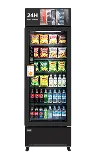
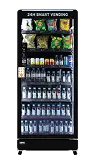
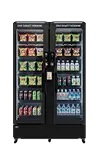
The landscape of retail automation is shifting rapidly, driven by advanced AI Vending Technology. For entrepreneurs, operators, and business owners, transitioning from traditional coil-based machines to smart grab-and-go refrigerators represents a significant upgrade in both user experience and operational efficiency. However, selecting the right smart vending machine is no longer just about physical capacity; it is about aligning hardware features and software capabilities with specific deployment scenarios to maximize your Return on Investment (ROI).
When building or expanding a vending business, choosing the appropriate technology stack determines how effectively you can manage inventory, reduce maintenance costs, and satisfy customer demand. This buying guide explores the essential features you must evaluate and demonstrates how to match specific machine profiles to distinct business environments.
Essential Features to Look for in AI Vending Technology
To ensure long-term profitability and seamless operations, operators should evaluate machines based on the following core technological features.
1. Advanced Computer Vision & Sensor Fusion
The backbone of modern smart vending is its ability to accurately detect which products a consumer takes. High-quality machines utilize a combination of computer vision (cameras tracking hand movements and product shapes) and gravity sensors (weighing shelves down to the gram). This sensor fusion minimizes error rates, prevents shrinkage, and ensures the machine accurately bills the customer, even if they pick up an item and place it back on a different shelf.
2. Frictionless “Grab and Go” Payment Systems
Traditional vending drops products and frequently suffers from jammed coils. AI-powered machines offer a frictionless experience: the user taps a credit card or mobile wallet, opens the door, selects their items, and simply closes the door to complete the transaction. When purchasing, look for systems that support versatile payment gateways, including credit cards, Apple Pay, Google Wallet, and localized mobile payment apps.
3. Real-Time Inventory and Cloud Analytics
A successful vending operation relies on efficient routing and restocking. Your chosen machine must connect to a robust cloud management platform. This software should provide real-time inventory tracking, sales analytics, and automated restock alerts. Operators who leverage these data analytics can optimize product merchandising, reduce food waste (especially for fresh foods), and ensure machines are only visited when restocking is actually required.
4. Dynamic Pricing and Digital Signage
Some AI vending machines feature integrated digital screens. These screens allow operators to run remote digital advertising, providing a secondary revenue stream. Additionally, software-controlled inventory allows for dynamic pricing—enabling operators to automatically discount perishable items like sandwiches or salads as they approach their expiration dates.
Cost Factors & ROI Implications
Investing in AI vending involves analyzing both upfront capital and ongoing operational expenses.
- Hardware Investment: The physical size, sensor density, and screen inclusions dictate the initial cost. Dual-door machines cost more upfront but double your peak-hour sales capacity.
- Software Licensing: Most AI machines require a monthly SaaS (Software as a Service) fee for data processing, cloud hosting, and payment gateway maintenance.
- Maintenance & Labor: Smart fridges eliminate the mechanical failures of traditional coils, significantly reducing technician call-outs. Furthermore, telemetry data reduces driver routing costs by up to 40%.
- Revenue Potential: Higher product diversity (such as selling fragile items, fresh meals, and irregular-shaped beverages) increases average ticket sizes compared to traditional snack machines.
Selection Guide: Matching Machines to Business Scenarios
Not every location requires a high-capacity, dual-door setup, nor does every office need a machine with a massive digital advertising screen. Selecting the optimal machine requires matching footprint, throughput, and specialized features to the location’s foot traffic and demographic.
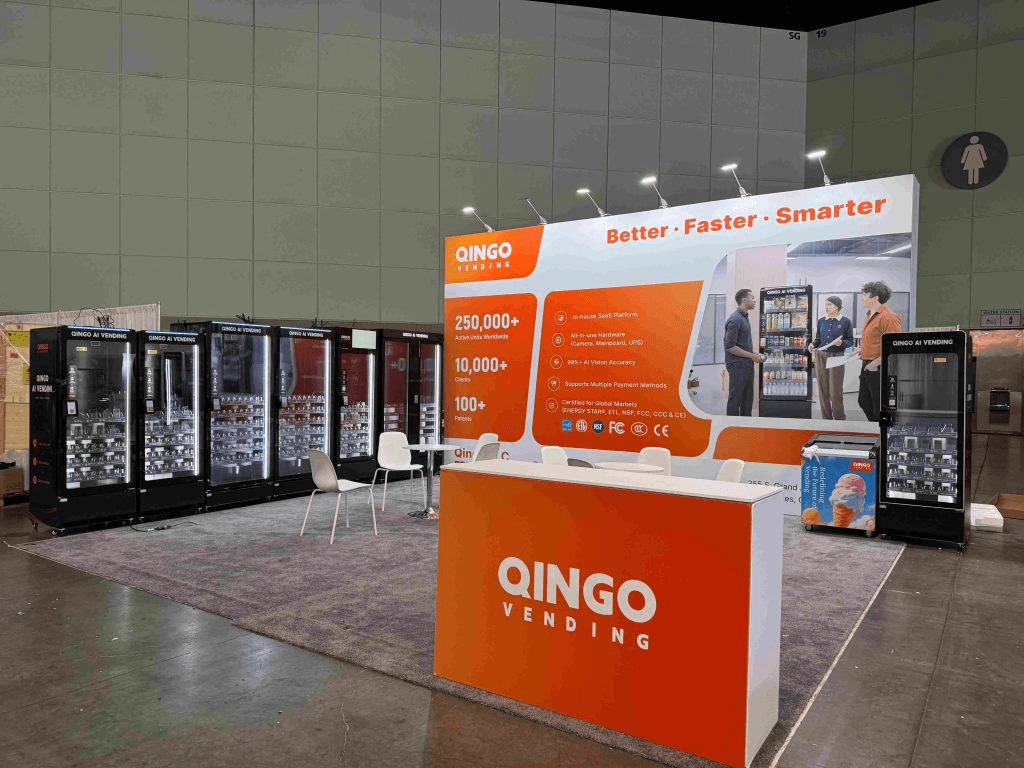
The following comparison illustrates how different scenarios require specific machine features, using the specialized lineup from Qingo as a benchmark for strategic deployment.
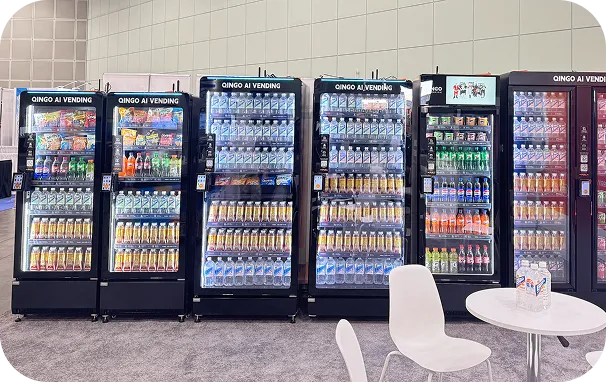
AI Vending Machine Scenario Comparison
| Deployment Scenario | Key Requirement | Recommended Machine Feature | Qingo Model Match |
| Office & Small Clinic | Limited Space, Fast ROI | Compact footprint, easy deployment | Qingo Ten 409 |
| School & Mid-Size Facility | Cost-Effective, Balanced Capacity | Easy mobility, balanced volume | Qingo King 509 |
| Transit Hub & Public Mall | Ancillary Ad Revenue | Digital signage, remote advertising | Qingo Queen 509 |
| Hospital & Manufacturing | High Demand, Product Variety | Large capacity, high throughput | Qingo Ace 779 |
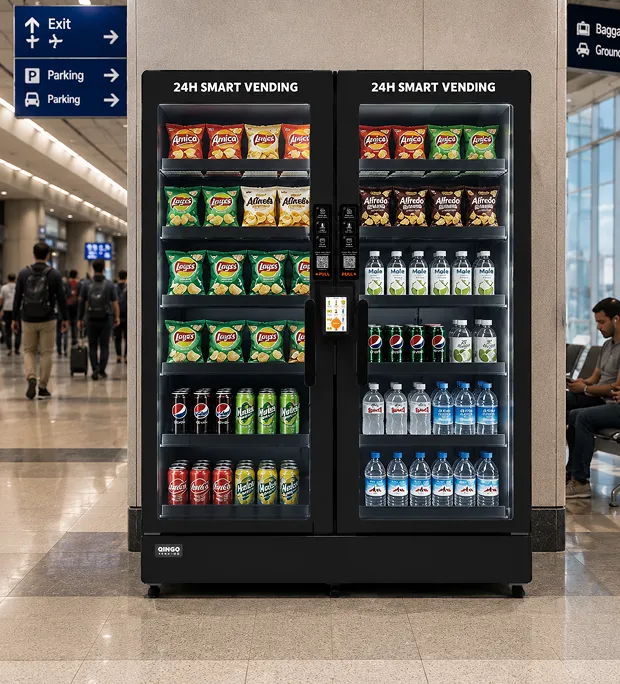
| Large Campus & Airport | Peak Hour Traffic | Dual-door shopping, simultaneous users | Qingo Pair 1208 |
1. Corporate Offices and Boutique Hotels
Ideal Match: Qingo Ten 409
In smaller corporate breakrooms or boutique hotel lobbies, space is at a premium. Operators need a machine that requires a small footprint but still delivers the premium grab-and-go experience. The Qingo Ten 409 is designed for easy deployment in tight spaces, allowing operators to achieve a faster ROI with lower upfront capital while still offering employees fresh meals, salads, and premium beverages.
2. Schools and Mid-Sized Facilities
Ideal Match: Qingo King 509
Educational institutions and mid-sized manufacturing plants require a balance between affordability and capacity. The Qingo King 509 provides a cost-effective solution with a compact design that is easy to move and install. It delivers the best overall value for operators looking to scale their fleets across multiple campus buildings without overcommitting to massive hardware sizes.
3. High-Traffic Transit Hubs and Malls
Ideal Match: Qingo Queen 509
In public spaces like train stations, airports, or shopping centers, foot traffic is heavily transient. Here, operators can generate additional revenue beyond food and beverage sales. The Qingo Queen 509 features integrated digital signage. This enables operators to sell remote advertising space on the machine’s screen, turning the vending unit into a profitable digital billboard while serving customers.
4. Hospitals and Large Manufacturing Plants
Ideal Match: Qingo Ace 779
Hospitals operate 24/7, and large manufacturing shifts require substantial food variety. A small machine will sell out too quickly, resulting in missed sales and frustrated customers. The Qingo Ace 779 is built for large capacity and high throughput. It accommodates a wider variety of product shapes and sizes, ensuring workers and medical staff have access to full meals and diverse drink options around the clock.
5. Large Universities and Mega-Complexes
Ideal Match: Qingo Pair 1208
In massive facilities, the primary bottleneck is transaction time during rush hours (e.g., between classes or during coordinated lunch breaks). The Qingo Pair 1208 solves this with a dual-door system. It allows multiple shoppers to browse and purchase simultaneously, providing maximum throughput and ensuring that high-volume locations maximize their sales during critical peak periods.
Final Recommendation for Vending Operators
When procuring AI Vending Technology, base your purchasing decision on the specific constraints and opportunities of your target locations. Assess the daily foot traffic, spatial limitations, and the types of products your end-users demand. By strategically placing compact units like the Qingo Ten in offices, leveraging the ad revenue of the Qingo Queen in public spaces, and deploying high-capacity units like the Qingo Pair in massive hubs, you can build a highly optimized, profitable, and future-proof automated retail business.