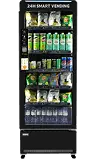
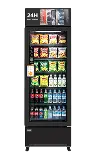
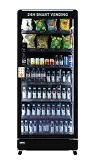
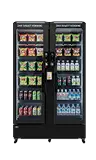
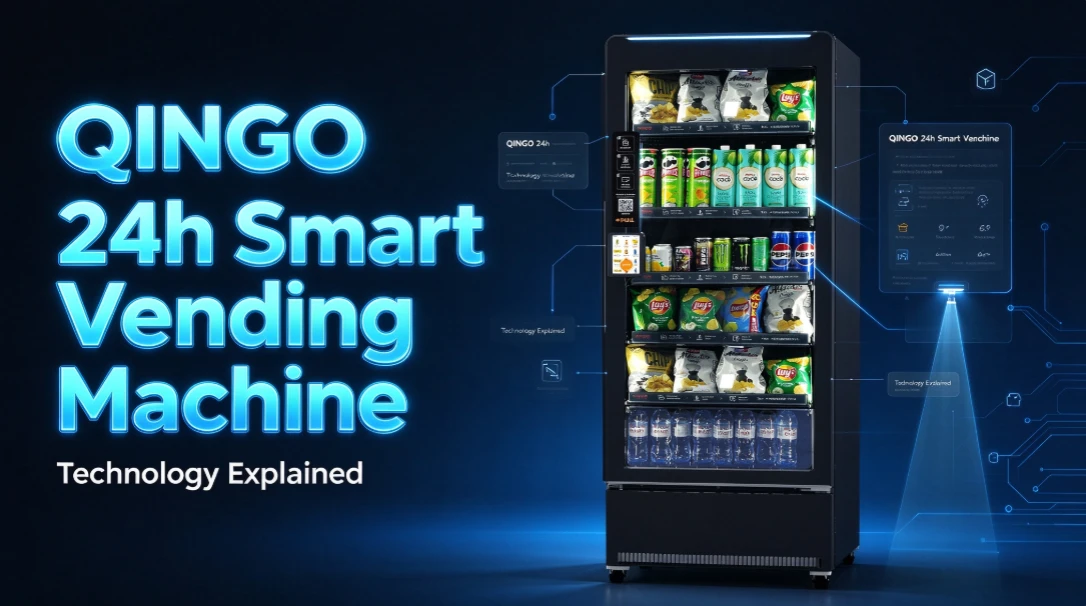
The global retail landscape heavily relies on automation and unmanned technology. Modern businesses demand round-the-clock availability without compromising on operational efficiency. A reliable 24h smart vending machine solves these challenges by combining robust hardware with intelligent software systems.
Operators need machines that function independently and securely at all times. QINGO engineers its vending solutions to meet these exact demands. Our technical architecture integrates IoT sensors, real-time analytics, and automated maintenance protocols. This article explores the specific hardware and software technologies that power QINGO’s vending machines.
Technology Overview: Building a Reliable System
Unattended retail requires more than just a refrigerated box. The market is rapidly shifting from mechanical dispensers to sophisticated, data-driven IoT endpoints. To achieve true 24/7 reliability, a vending machine must process payments flawlessly, protect inventory, and communicate health data to operators in real-time.
QINGO tackles this through a dual-layer approach. The hardware layer utilizes advanced sensors to monitor physical conditions. Simultaneously, the software layer processes this data using cloud-based algorithms. This synergy eliminates guesswork for operators and creates a frictionless purchasing experience for consumers.
Advanced Hardware System Design
Hardware forms the foundation of any unattended retail solution. QINGO equips every 24h smart vending machine with industrial-grade components designed to prevent downtime and protect assets.
- Dual SIM Auto-Switching: Network drops cause failed payments and lost revenue. QINGO machines feature dual SIM modules that automatically switch to the strongest cellular network. This guarantees continuous online status and payment processing.
- Temperature Monitoring: Spoilage ruins profits. Integrated IoT sensors track internal temperatures 24/7. The system instantly alerts operators if cooling performance drops, protecting perishable food and beverage inventory.
- Remote Fault Diagnosis: Traditional maintenance requires physical inspections. QINGO hardware runs continuous self-diagnostic checks. The machine identifies component failures and sends detailed error codes to the operator’s dashboard.
- Device Security and Anti-Theft: Operating 24 hours a day exposes machines to vandalism. QINGO uses reinforced chassis designs and integrated door sensors. These physical barriers work alongside digital alerts to prevent unauthorized access.
Intelligent Software and Automation
While hardware executes the physical tasks, software drives the operational intelligence. QINGO software transforms raw sensor data into actionable business insights. Industry data shows that smart vending software significantly reduces wasted service trips and optimizes daily management.
- Inventory Alert System: The platform continuously tracks real-time stock levels and predicts sell-outs. This eliminates manual counting and maximizes sales by ensuring popular products are always available.
- Abnormal Behavior Recognition: The system utilizes AI logic to detect irregular purchasing patterns or potential tampering. This proactive monitoring reduces inventory shrinkage and improves the security of the machine environment.
- Payment System Stability: The software processes cashless transactions via encrypted cloud channels. Continuous backend monitoring ensures fast, secure checkouts with zero friction, preventing cart abandonment at the point of sale.
- Replenishment Planning: The management dashboard analyzes sales velocity to schedule optimal restocking routes. This intelligent routing cuts fuel costs, reduces labor hours, and ensures drivers only visit machines requiring service.
Business Impact for Operators
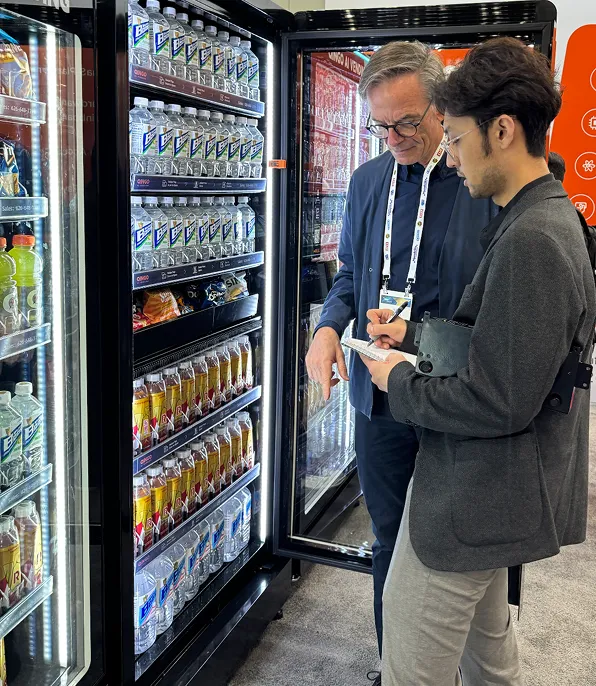
Deploying a QINGO 24h smart vending machine directly improves the bottom line. Operators gain complete visibility over their fleet without leaving the office. Remote diagnostics mean technicians only dispatch when absolutely necessary, carrying the exact parts needed for the fix.
Predictive replenishment also means drivers only visit machines that require stock. This data-driven approach drastically lowers operational overhead. Ultimately, operators can manage larger machine networks with fewer resources and less manual effort.
Future Development in Vending Technology
The next evolution of smart vending will rely even more on machine learning. QINGO continuously updates its software to recognize broader consumer trends and optimize energy consumption.
Future updates will enhance predictive maintenance capabilities, allowing the system to foresee component wear before a failure occurs. By investing in scalable IoT architecture now, operators future-proof their retail businesses against shifting market demands.
FAQ
- What makes a 24h smart vending machine different from traditional models?
A 24h smart vending machine uses IoT connectivity and AI software to manage operations remotely. Traditional models rely on mechanical components and require manual inventory checks, while smart machines automate these processes entirely. - How does the dual SIM auto-switching feature work?
The system continuously monitors cellular signal strength. If the primary network connection drops, the router automatically switches to the secondary SIM card to maintain uninterrupted payment processing and telemetry. - Can the system prevent food spoilage?
Yes. The machine features continuous temperature monitoring sensors. If the internal temperature fluctuates beyond safe limits, the software instantly alerts the operator to take preventive action. - How does remote fault diagnosis save money?
It eliminates unnecessary service trips. Operators receive exact error codes via the cloud dashboard, allowing them to bring the correct replacement parts or reboot the machine remotely without sending a technician. - How does the software handle replenishment planning?
The software analyzes real-time sales data and inventory alerts. It then calculates the most efficient restocking routes and schedules, ensuring drivers only visit machines that actually need products.