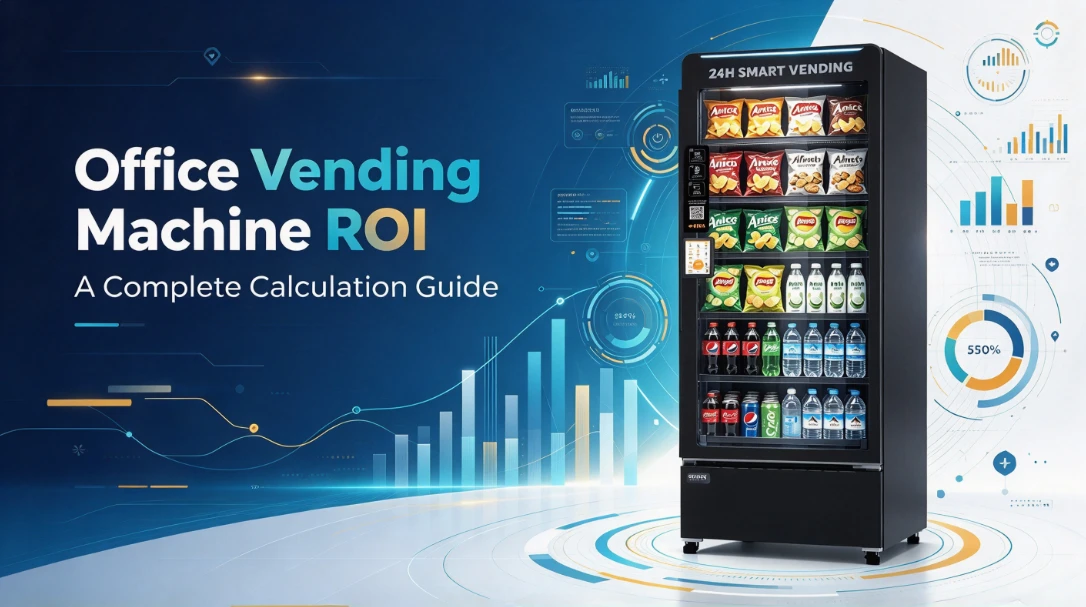
Investing in a workplace snack and beverage solution requires careful financial planning. Many business owners want to know exactly when their equipment will break even. Calculating your office vending machine ROI gives you a clear financial picture. It helps you understand profit margins and your expected payback period.
What Is Office Vending Machine ROI?
Office vending machine ROI measures the financial efficiency of your equipment. It compares your net profit against your total initial investment. This metric reveals how quickly the machine pays for itself. A positive return means your location generates enough daily sales to cover all ongoing operational expenses.
How to Calculate Your Investment Return
You need a simple formula to determine your baseline return. Subtract your total operating costs from your total revenue to find the net profit. Divide this net profit by your initial investment, then multiply the result by 100.
To accurately apply this formula, you must track three main categories:
- Initial Investment: Machine purchase price, shipping, installation, and the first batch of inventory.
- Ongoing Revenue: Average daily sales multiplied by the number of active working days.
- Operational Costs: Restocking fees, routine maintenance, transaction fees, and electricity usage.
Essential Conditions to Consider
Office environments possess unique traffic patterns that dictate your success. You must evaluate the total number of on-site employees. A company with 100 daily workers generates vastly different revenue than a 20-person startup.
Hybrid work schedules also reduce daily foot traffic. If most staff work from home twice a week, this directly impacts your weekly sales volume. You must adjust your revenue projections based on actual physical attendance rather than total payroll numbers.
Hidden Costs: Spoilage and Holidays
Many operators forget to account for hidden financial drains. Product spoilage significantly impacts your bottom line. Fresh foods, dairy products, and certain pastries have short shelf lives. Unsold expired items become immediate financial losses. You must track inventory carefully and adjust purchasing habits to minimize this waste.
Major holidays and staff vacations create significant revenue gaps. Offices often shut down for long weekends or holiday weeks. Your machine generates zero income during these periods. However, you still pay for electricity, software subscriptions, and potential inventory expiration. You must factor these quiet weeks into your yearly projections.
Estimate Your Timeline with a Payback Calculator
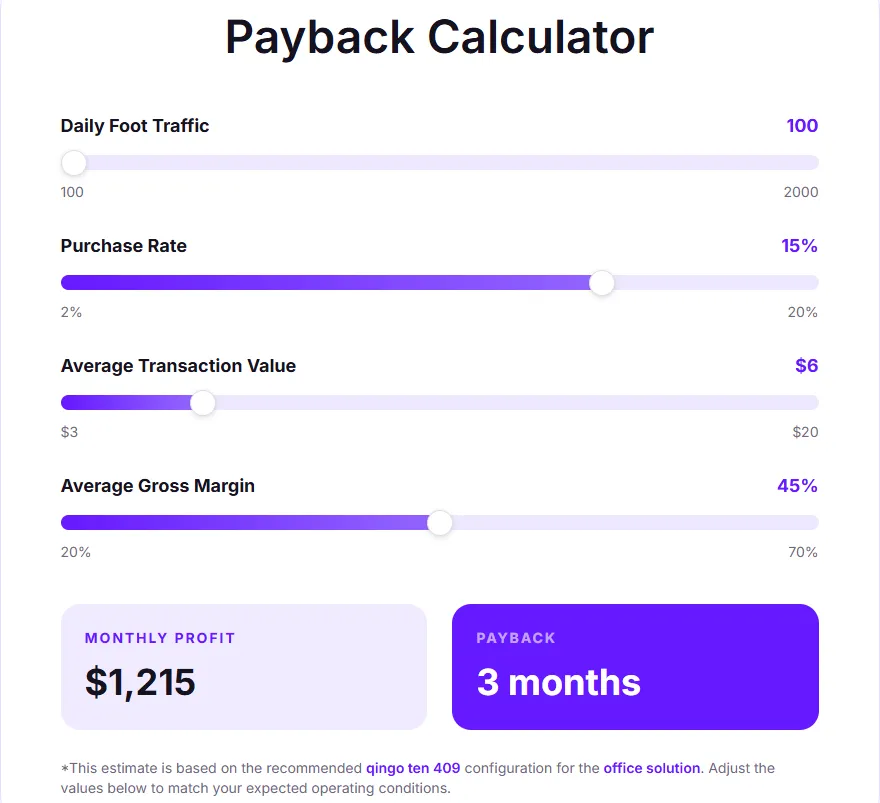
Manual calculations take time and leave room for critical errors. We recommend using a digital payback calculator to estimate your break-even point accurately. These specialized tools help you input specific variables to get an instant, realistic financial forecast.
Visit our office solutions page to utilize a professional payback calculator. You simply enter your machine cost, estimated daily sales, and profit margins. The system automatically accounts for working days and gives you a precise timeline for profitability.
Summary
Proper financial planning ensures a successful vending operation. You must calculate initial costs, project realistic revenue based on foot traffic, and account for hidden expenses like spoilage and holidays. Use specialized digital calculators to forecast your break-even point accurately and secure your investment.
Read More About Office Vending Machine
What Is an Office Vending Machine? Complete 2026 Guide
FAQ
- How long does it take to get a return on an office vending machine?
Most operators break even within 12 to 18 months. This timeline depends heavily on initial machine costs, daily employee foot traffic, and the profit margin of your selected products. - Does employee headcount affect my vending machine profit?
Yes, daily foot traffic directly determines your sales volume. A minimum of 50 on-site employees generally provides enough consistent daily purchases to sustain a profitable operation. - How do expired products impact my bottom line?
Expired products represent immediate financial losses. You pay for the initial inventory but generate zero revenue, which lowers your overall profit margins and extends your break-even period. - Should I factor office holidays into my revenue projections?
You must deduct office closure days from your annual sales estimates. Machines generate no revenue during major holidays, yet fixed operational costs like electricity and software still apply. - What is the easiest way to estimate my break-even point?
Using a digital payback calculator provides the fastest and most accurate estimate. You simply input your initial costs, product margins, and expected sales to receive a realistic timeline.