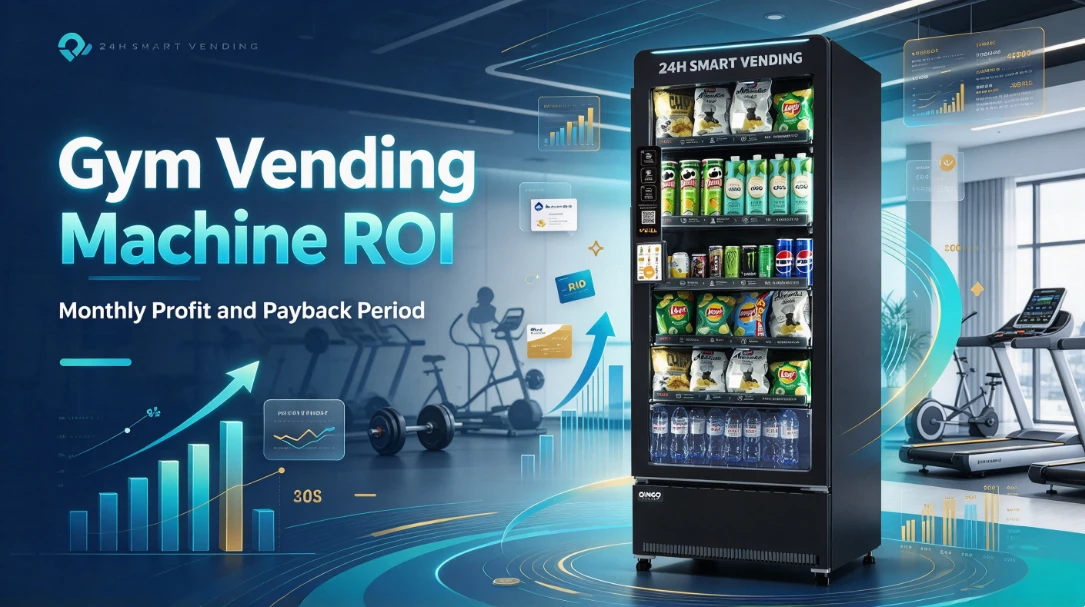
Calculating the return on investment (ROI) for a gym vending machine requires analyzing four primary variables: daily member check-ins, purchase conversion rate, average transaction value, and gross product margin. Most well-placed smart fitness cabinets achieve full hardware payback within 3 to 9 months.
Fitness centers offer a captive audience of health-conscious consumers who actively seek hydration, energy, and muscle recovery products. However, profitability depends on disciplined financial modeling rather than guesswork. Understanding both revenue drivers and hidden operating costs helps operators invest with confidence.
Core Revenue Factors to Consider in Your ROI Model
Accurate revenue forecasting starts with a straightforward commercial formula: Monthly Gross Revenue = Daily Foot Traffic × Purchase Rate × Average Transaction Value × 30 Days. Evaluating each variable realistically prevents overestimated projections.
- Daily Member Check-Ins vs. Total Enrollment: A common mistake among new operators is basing projections on a club’s total membership roster. A gym with 2,000 enrolled members typically sees 200 to 400 daily check-ins. Your ROI calculation must use verified daily door swings passing the machine’s physical footprint.
- Purchase Conversion Rate and Machine Placement: Purchase conversion rate measures the percentage of daily visitors who buy from the cabinet. In fitness venues, conversion rates generally range from 3% to 15%. Positioning the unit near the main entrance, locker room corridor, or free-weight area maximizes visibility and impulse buying.
- Average Transaction Value (ATV) and Basket Size: Legacy coil machines restrict shoppers to single-item drops, keeping average tickets near $2.00 to $2.50. Modern AI smart cabinets feature magnetic-lock doors and computer vision, allowing members to grab a $5.00 protein shake and a $3.50 energy bar in one tap, raising ATV to $6.00 or higher.
- Product Assortment and Gross Margin Mix: Fitness retail supports much higher price points than standard soda and candy vending. Stocking ready-to-drink (RTD) protein shakes, pre-workout shots, electrolyte mixes, and lifting straps typically yields gross margins between 45% and 60% when sourced at wholesale volume.
Cost Factors: Upfront Investment and Monthly Overhead
Gross revenue tells half the financial story. To determine true net profit and payback speed, investors must subtract upfront capital expenditures (CapEx) and ongoing monthly operating expenses (OpEx) from gross sales.
- Hardware and Freight (CapEx): The purchase price of the commercial cabinet, freight shipping, and initial placement setup.
- Cost of Goods Sold (COGS): Wholesale inventory replenishment costs, which generally account for 40% to 55% of gross revenue.
- Location Commission: Independent operators usually pay the facility owner a 10% to 20% revenue share, while gym owners operating their own machine keep this margin.
- Software and Payment Fees: Monthly cloud management fees, 4G cellular data, and cashless processing rates (typically 2.5% to 5% per transaction).
- Utilities and Spoilage: Refrigeration electricity ($15 to $35 per month), restocking route labor, and occasional write-offs for expired items.
Estimate Your Returns with Our Interactive Payback Calculator
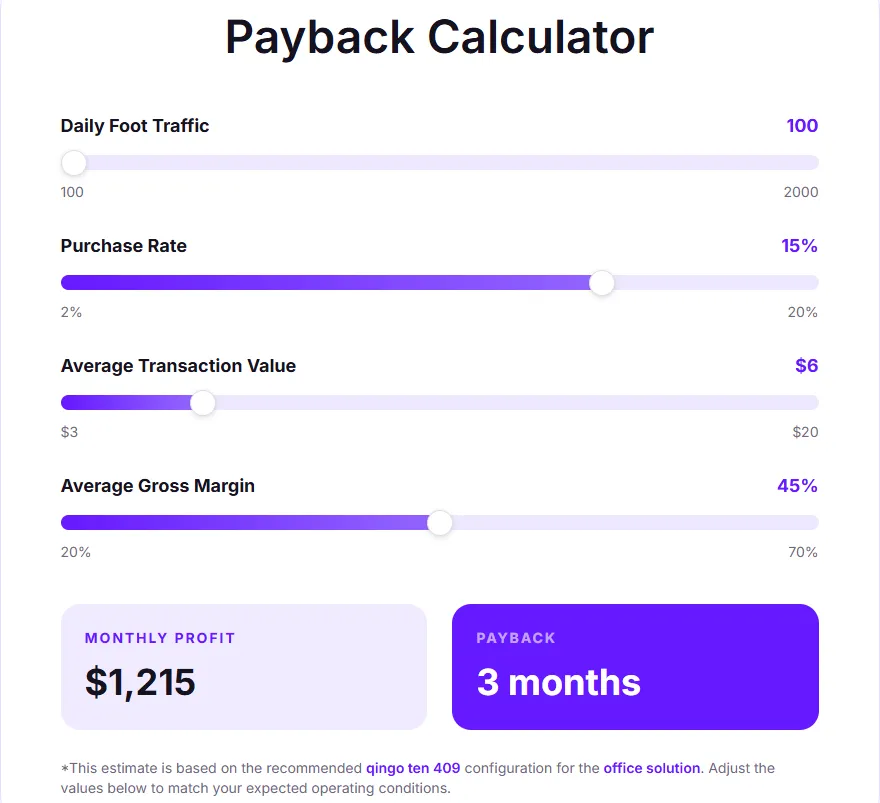
Instead of building complex spreadsheets from scratch, prospective buyers can model their exact venue metrics using the interactive Payback Calculator. While the page defaults to a high-capacity Qingo Ace 779 preset, its four sliders adapt seamlessly to fitness facilities.
- Input Daily Foot Traffic (100 to 2,000): Slide the indicator to match your gym’s average daily check-ins rather than total membership count.
- Set Your Purchase Rate (2% to 20%): Select a conservative 5% to 8% for standard gyms, or 12% to 15% for 24-hour clubs without a staffed pro shop.
- Choose Average Transaction Value ($3 to $20): Set the slider between $5 and $8 to reflect premium RTD protein drinks, recovery snacks, and gym accessories.
- Define Average Gross Margin (20% to 70%): Adjust the margin between 45% and 55% based on your wholesale supplement supplier pricing.
Conclusion
Investing in a smart gym vending machine delivers strong recurring cash flow when backed by realistic traffic metrics, high-margin sports nutrition, and frictionless AI grab-and-go technology. Test your facility’s numbers in the Payback Calculator today to select the right cabinet configuration for your budget.
FAQ
1. How much does a gym vending machine make per month?
A well-placed gym vending machine typically generates between $1,500 and $4,500 in gross monthly sales, leaving $600 to $2,000+ in net profit after product costs and operating fees. Actual earnings depend on daily member check-ins, product pricing, and whether the facility operates 24 hours a day.
2. How long does it take to pay off a smart vending machine in a gym?
Most operators recover their initial hardware investment within 3 to 9 months. High-traffic health clubs selling high-margin ready-to-drink protein shakes and supplements achieve faster payback periods than smaller studios selling basic bottled water and snacks.
3. What are the highest-margin products to stock in a fitness vending machine?
Ready-to-drink protein shakes, pre-workout energy shots, electrolyte hydration packets, and protein bars deliver the strongest returns, averaging 45% to 60% gross margins. Many operators also stock high-margin non-perishable gym essentials like lifting straps, resistance bands, and earbuds.
4. How much commission do gyms charge vending machine operators?
Independent vending operators generally pay fitness center owners a monthly revenue share between 10% and 20% of gross sales. When gym owners purchase or lease the smart cabinet directly, they retain the entire retail profit margin and eliminate commission expenses.
5. Why do AI smart coolers outperform traditional coil vending machines in gyms?
AI smart coolers allow shoppers to open the door and grab multiple items in a single tap, which increases average transaction values by 30% to 50% compared to single-drop coil machines. Open shelving also accommodates irregular supplement bottles and shaker cups without mechanical coil jams.