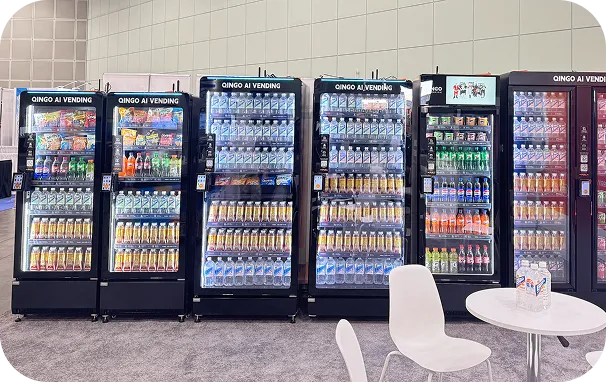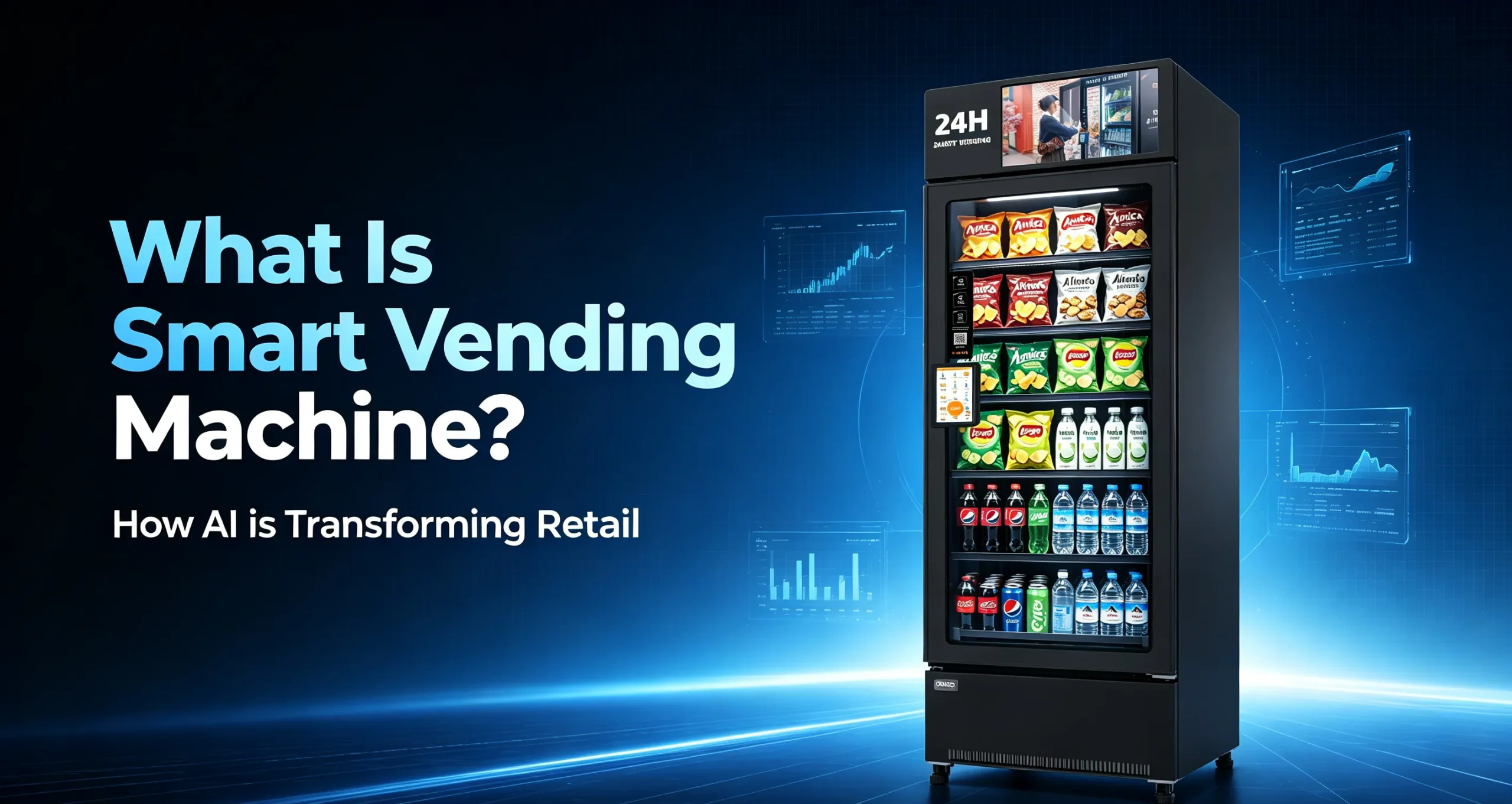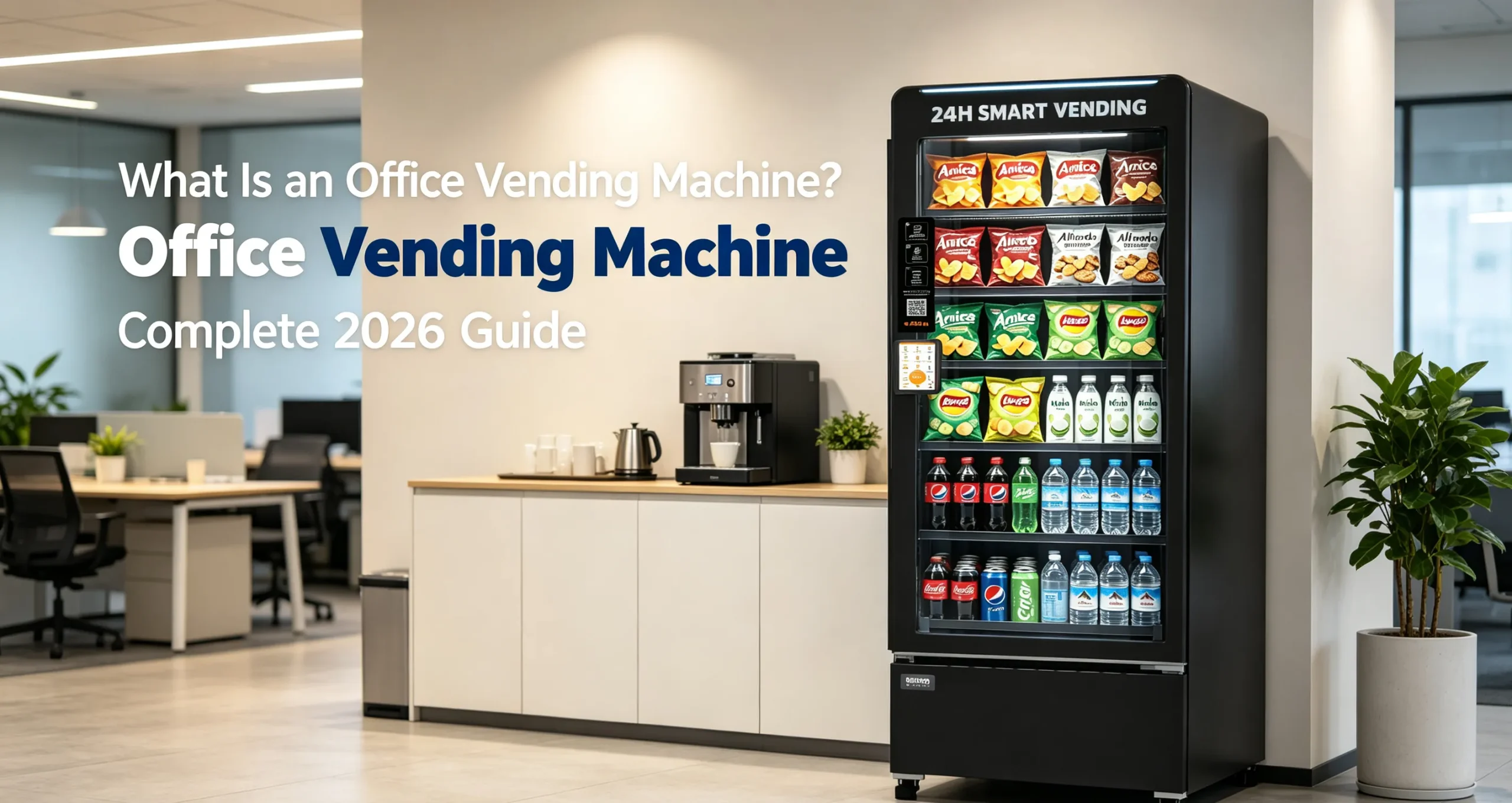
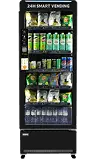
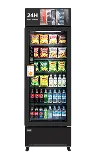
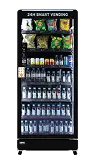
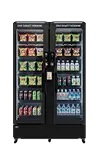
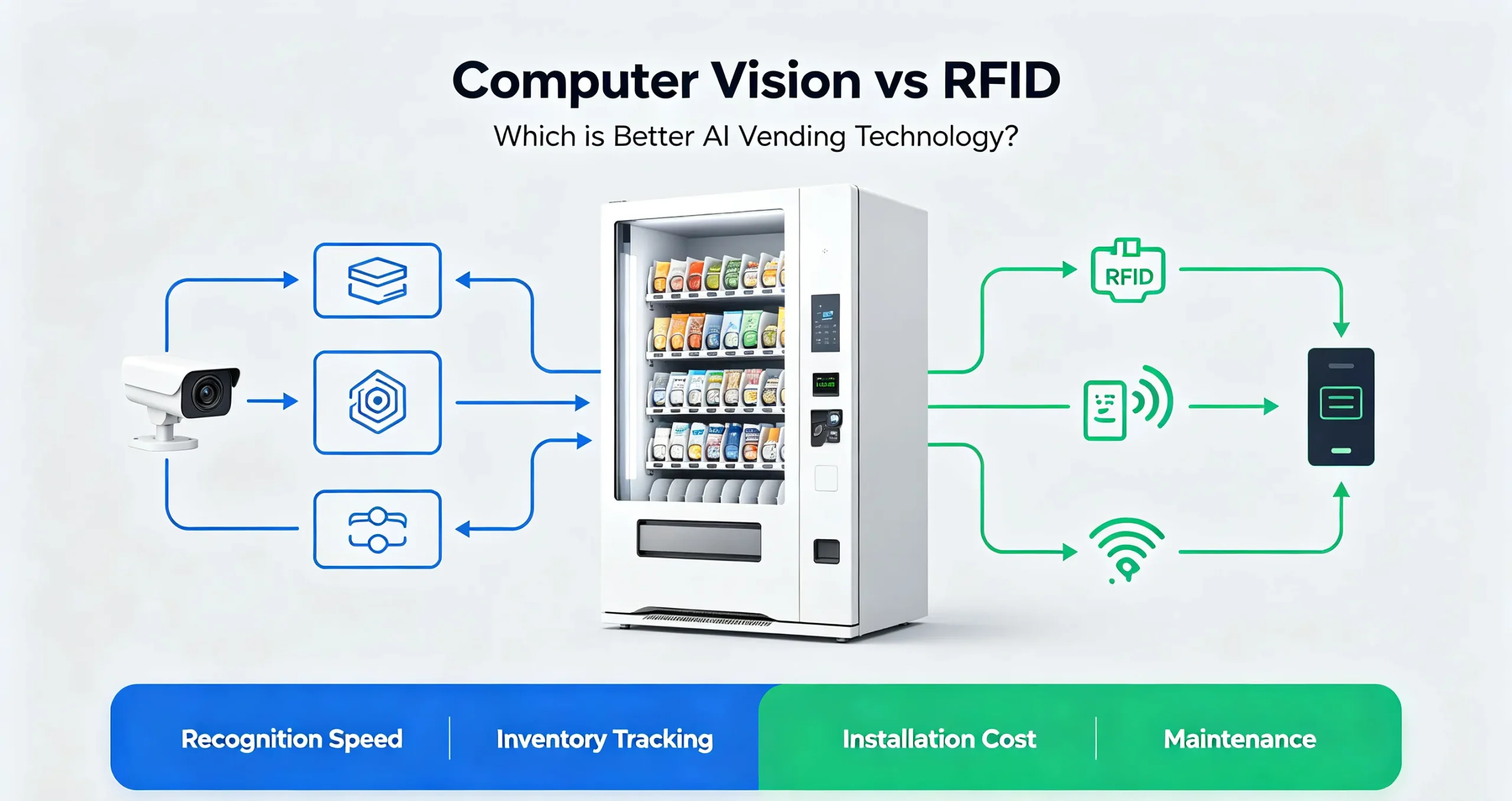
The unattended retail market is rapidly shifting from traditional mechanical vending machines to frictionless, grab-and-go smart fridges. At the heart of this transformation is AI vending technology, which allows consumers to simply swipe a card, open a door, grab their items, and walk away.
For vending operators and business owners, choosing the right underlying system is the most critical technical decision you will make. Currently, the market is dominated by two primary solutions: Computer Vision (AI Vision) and RFID (Radio Frequency Identification).
While both systems enable a seamless consumer experience, they possess fundamentally different operational models, cost structures, and technical limitations. This educational guide will explain how each technology works, compare their core differences, and help you determine which system offers the best long-term value for your smart vending business.
What Are These AI Vending Technologies?
Before diving into the comparison, it is essential to understand the basic concepts behind these two leading smart vending systems.
Understanding RFID in Vending
RFID is a wireless technology that uses electromagnetic fields to identify and track objects. In an RFID smart vending machine, every single product must be manually fitted with a passive UHF (Ultra-High Frequency) sticker tag. The vending cabinet is equipped with antennas and an RFID reader that constantly scans the interior to detect these tags.
Understanding Computer Vision in Vending
Computer Vision is a branch of artificial intelligence that empowers machines to “see” and interpret the physical world. In a computer vision vending machine, high-definition cameras are installed inside the cabinet. Powered by deep learning algorithms, the system recognizes products based on their physical appearance—such as shape, color, and size—without the need for any physical tags or barcodes.
How They Work in Smart Vending Systems
Both technologies aim to achieve the same result: accurately tracking what a customer removes from the machine to calculate the final charge. However, their internal processes are entirely different.
The RFID Process
- Preparation: The vending operator purchases RFID tags and manually applies one to every snack and beverage before stocking.
- Access: The customer taps a credit card to unlock the door.
- Scanning: As the customer browses and removes items, the internal reader continuously scans the remaining tags.
- Checkout: When the door closes, the system compares the current tag inventory with the previous inventory. The missing tags represent the purchased items, and the customer is billed accordingly.
The Computer Vision Process
- Preparation: The operator simply places standard, untagged products onto the machine’s shelves.
- Access: The customer unlocks the door via a payment terminal or mobile app.
- Visual Tracking: As the customer reaches in, AI cameras track their hand movements. Using dynamic and static vision analysis, the AI determines exactly which item was picked up or put back.
- Checkout: Once the door closes, the algorithm finalizes the visual data and instantly charges the customer’s account based on the recognized items.
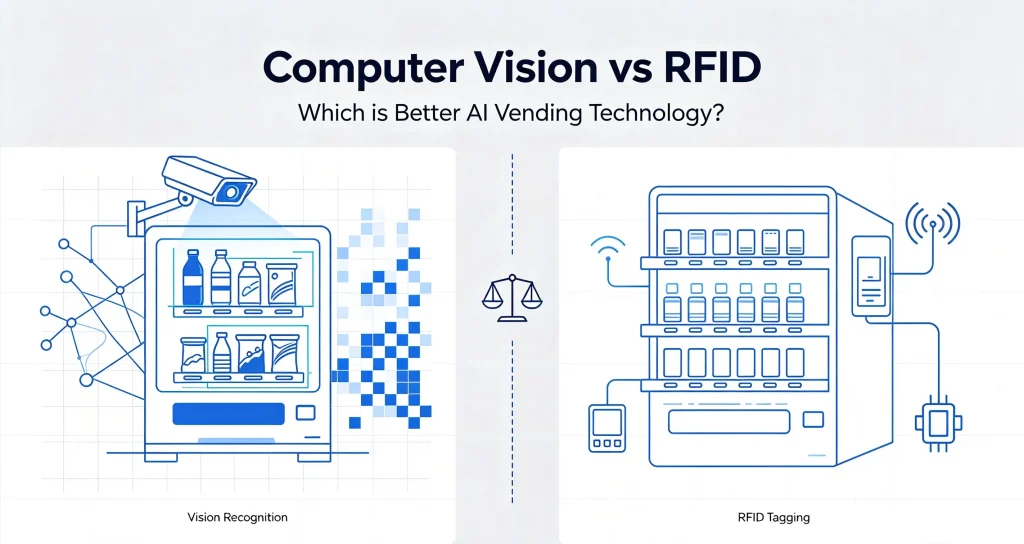
Computer Vision vs RFID: Core Differences
To evaluate which AI vending technology is better suited for a profitable route, operators must look beyond the initial hardware purchase.
| Feature | Computer Vision (AI Vision) | RFID Technology |
| Consumable Cost | $0.00 per item | $0.06 – $0.15+ per item |
| Preparation Labor | Zero (Scan-and-stock) | High (Manual tagging required) |
| Product Compatibility | Universal (Snacks, liquids, metals) | Poor with liquids and metals |
| Theft Prevention | High (Visual confirmation of removal) | Vulnerable (Tags can be peeled off) |
| System Maintenance | Software/Cloud updates | Hardware tuning (Antenna calibration) |
Why Computer Vision is the Future of AI Vending Technology
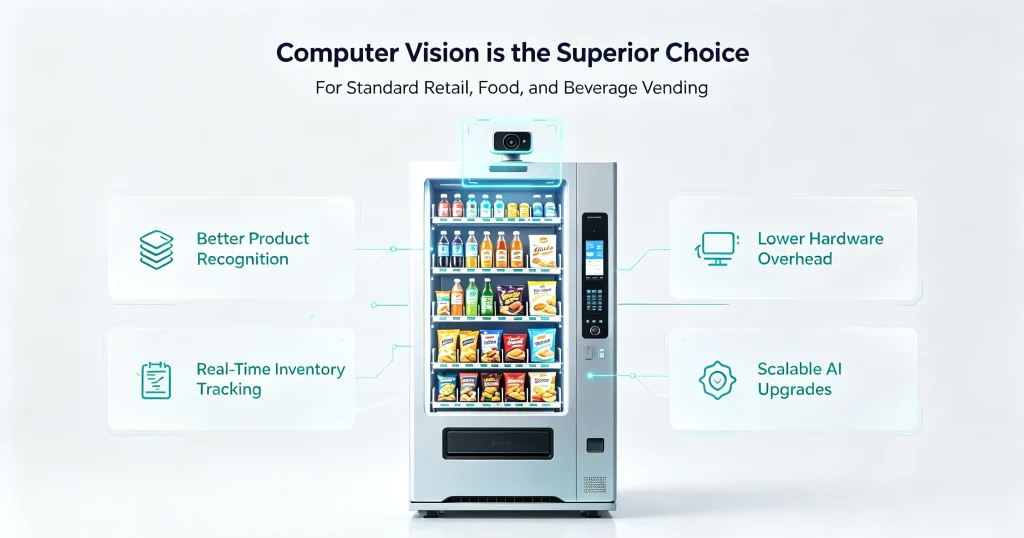
For standard retail, food, and beverage vending, Computer Vision has rapidly emerged as the superior choice. Here is why the industry is shifting toward vision-based systems:
1. Zero Marginal Cost per Item
The biggest drawback of RFID is the ongoing consumable cost. Standard passive UHF tags typically cost between $0.06 and $0.15 each. If a vending machine sells 1,000 items a month, that is up to $150 in lost profit per machine, per month—just on stickers. Computer Vision eliminates this expense entirely, operating on a front-loaded hardware model with no per-item cost.
2. No Material Interference
Vending machines predominantly sell beverages in liquid form or aluminum cans. Radio waves struggle to penetrate liquids, and metal surfaces reflect RFID signals, causing severe accuracy issues. To tag a metal soda can reliably, operators must purchase specialized “on-metal” RFID tags, which can cost upwards of $0.50 each. Computer Vision relies strictly on visual identification, completely bypassing material interference issues.
3. Drastically Reduced Labor Costs
Applying an RFID tag to every single candy bar and water bottle is a labor-intensive process that significantly slows down route operators. With a computer vision smart fridge, the restocking process is identical to stocking a traditional machine: you simply place the items on the shelf. This frictionless operation allows route drivers to service more machines per day.
4. Advanced Retail Analytics
Because Computer Vision systems act as the “eyes” of the machine, they gather rich visual data. Operators can access heatmaps, track how customers interact with products, and optimize shelf layouts (planograms) based on real user behavior—capabilities that traditional radio wave scanning cannot provide.
Applications and Ideal Scenarios
While Computer Vision offers widespread advantages, understanding the ideal deployment scenarios for both technologies ensures a better return on investment.
When to Use RFID:
RFID remains a powerful technology for specific, closed-loop environments. It is highly effective for vending high-value items where the cost of a tag is negligible, such as IT assets, expensive medical supplies, or specialized industrial tools. In these scenarios, RFID’s deterministic tracking provides strict inventory control.
When to Use Computer Vision:
Computer Vision is the definitive choice for high-volume, standard retail environments. If your business model involves selling snacks, fresh food, beverages, or daily necessities, AI vision systems provide the highest ROI. They are perfectly suited for deployment in offices, hospitals, university campuses, gyms, and public transit hubs.
Summary
The transition to unattended retail is heavily reliant on advanced AI vending technology. While RFID paved the way for smart inventory tracking, its ongoing consumable costs, high labor requirements, and struggles with liquid and metal products make it difficult to scale in traditional food and beverage vending.
Computer Vision offers a truly frictionless solution. By leveraging deep learning and high-definition cameras, it eliminates per-item tagging costs, broadens product compatibility, and streamlines route operations. For modern vending operators looking to scale efficiently and maximize profit margins, Computer Vision is undoubtedly the superior technological investment.
FAQ
1. What is AI vending technology?
AI vending technology refers to advanced systems—like computer vision, deep learning, and smart sensors—used in modern vending machines to automatically detect which products a consumer takes, allowing for a seamless, grab-and-go checkout experience without physical buttons or manual scanning.
2. How much do RFID tags cost for vending machines?
Standard passive UHF RFID tags used for basic retail items typically cost between $0.06 and $0.15 per unit. However, specialized tags required for metal packaging or liquids can cost significantly more, ranging from $0.50 to over $2.00 per tag.
3. Can RFID track liquid or metal products accurately?
RFID struggles with liquids and metals because radio waves are absorbed by water and reflected by metal surfaces. This causes read errors in vending machines unless highly specialized, expensive on-metal tags are used.
4. How does a computer vision smart fridge work?
A computer vision smart fridge uses internal cameras to monitor the shelves. When a customer opens the door and takes an item, AI algorithms analyze the visual data (such as hand movements and missing items) to identify the exact product and automatically charge the customer when the door closes.
5. Which technology offers a better ROI for vending operators?
For food, snack, and beverage vending, Computer Vision offers a significantly better ROI. Although the initial hardware may represent a higher upfront investment, it eliminates the recurring costs of buying RFID tags and drastically reduces the labor hours required to tag individual products.
Reference Sources
RFID Solutions. “Passive UHF RFID Tag Cost Per Tag | 2025 Volume Guide.”
REDYREF. “AI Camera vs. RFID Vending Technology for Smart Food Fridges.”
Grabit. “Redefining Retail: How Computer Vision Outperforms RFID in Product Detection.”
“RFID vs. Computer Vision: The Battle for the Future of Cashierless Retail.”