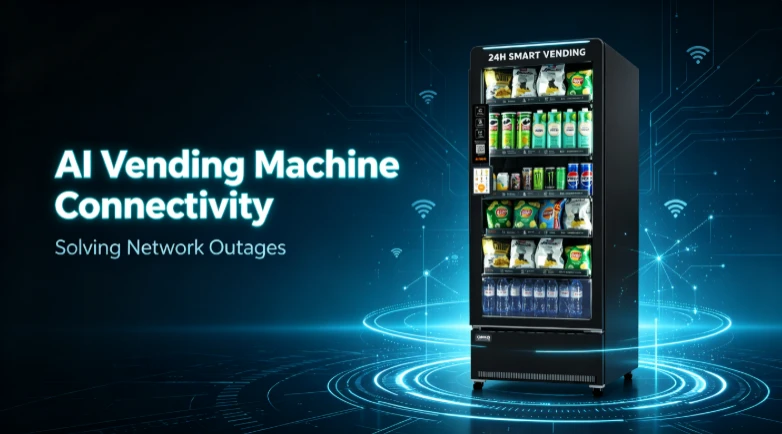
Seamless AI vending machine connectivity drives modern automated retail. Operators rely on continuous data streams for sales processing and remote management. When connections drop, businesses face immediate revenue loss and operational blindness. Understanding these vulnerabilities helps operators protect their technology investments.
How Network Outages Disrupt Vending Operations
A stable vending machine network serves as the central nervous system of smart retail. Unplanned disconnections impact three primary operational areas.
- Payment Processing Failures
Smart vending machines process cashless transactions in real-time. A network drop halts credit card and mobile wallet payments instantly. Customers abandon their purchases when terminals fail to authenticate. This leads to direct revenue loss and damages brand reputation at the point of sale.
- Data Synchronization Issues
Operators need accurate inventory data to plan efficient restocking routes. Disconnected machines cannot send real-time stock levels to cloud servers. Route drivers might arrive with the wrong products or skip machines that actually need immediate attention. This inefficiency increases logistics costs significantly.
- Remote Management Blind Spots
Modern fleets require constant monitoring for hardware health and temperature control. Network failures create dangerous blind spots in your multi location vending setup. You cannot reboot systems remotely, update pricing, or receive error alerts. Minor hardware glitches often escalate into major mechanical issues without early warnings.
The Qingo Solution: Dual SIM Connectivity and WiFi Integration
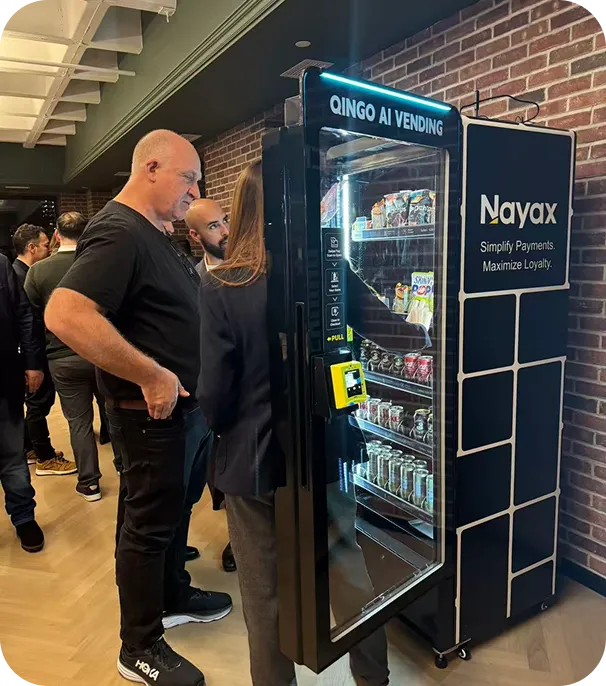
Qingo engineers developed a resilient communication architecture to eliminate costly downtime. Their machines integrate multiple network layers to maintain constant cloud communication. This strategic approach solves the most common issues in unattended retail environments.
- Dual SIM Connectivity Framework
Qingo machines feature a robust Dual SIM connectivity system. The internal hardware holds two SIM cards from different cellular providers. The system monitors signal strength actively and continuously. If the primary carrier experiences an outage, the machine automatically switches to the secondary network. This failover process happens in seconds, preventing transaction failures.
- Integrated WiFi Capabilities
Cellular signals often struggle in basements, hospitals, or deep indoor environments. Qingo addresses this common hurdle through built-in WiFi support. Operators can connect the machine directly to local building networks. The system uses WiFi as the primary connection while keeping the cellular network as a reliable backup. This flexibility suits complex deployment scenarios.
Business Impact of Redundant Networks
Investing in robust connectivity yields measurable business returns. Operators experience higher transaction success rates and dramatically lower maintenance costs. The table below highlights the operational differences between legacy networks and advanced configurations.
| Feature | Legacy Single Network | Qingo Dual SIM + WiFi |
| Network Redundancy | None | High (Automatic Failover) |
| Indoor Performance | Poor (relies on cellular) | Excellent (via WiFi) |
| Uptime Reliability | Vulnerable to carrier outages | Highly resilient |
| Multi Location Vending | Inconsistent coverage | Standardized stability |
| Maintenance Route | Requires on-site visits | Remote diagnostics |
Future Developments in Smart Vending Networks
Connectivity technology continues to evolve rapidly. Future systems will likely leverage 5G networks for high-bandwidth applications like interactive video displays. Edge computing will process basic transactions locally, further reducing the reliance on continuous cloud connections during brief network drops.
FAQ
- What is AI vending machine connectivity?
AI vending machine connectivity refers to the hardware and software networks linking machines to cloud servers. These systems enable cashless payments, inventory tracking, and remote management. - How does a network outage affect a smart vending machine?
A network outage immediately halts cashless payment processing and disrupts real-time telemetry data synchronization. Operators lose remote visibility over inventory levels and machine health. - What makes Dual SIM connectivity valuable for vending operators?
Dual SIM connectivity provides automatic network backup. The machine automatically switches to a secondary carrier if the primary cellular network drops, ensuring continuous uptime and sales. - Can smart vending machines use WiFi?
Yes, advanced models like Qingo support secure WiFi connections. Operators primarily use WiFi in basements, hospitals, or large complexes where cellular signals cannot penetrate thick walls. - How do operators manage multi location vending networks effectively?
Operators manage multi location vending through cloud-based telemetry platforms. This requires machines equipped with redundant network systems to maintain consistent data flows across all physical sites.
Reference Sources
- POND IoT. “Multi-Carrier Vending Connectivity for Reliable Operations.” https://www.pondiot.com/
- Vendon. “Machine Monitoring Explained.” https://vendon.net/
- Hologram. “What are Machine-to-Machine (M2M) SIMs?” https://www.hologram.io/