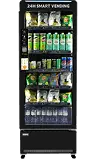
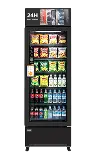
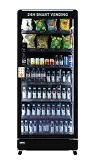
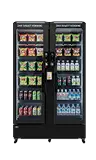
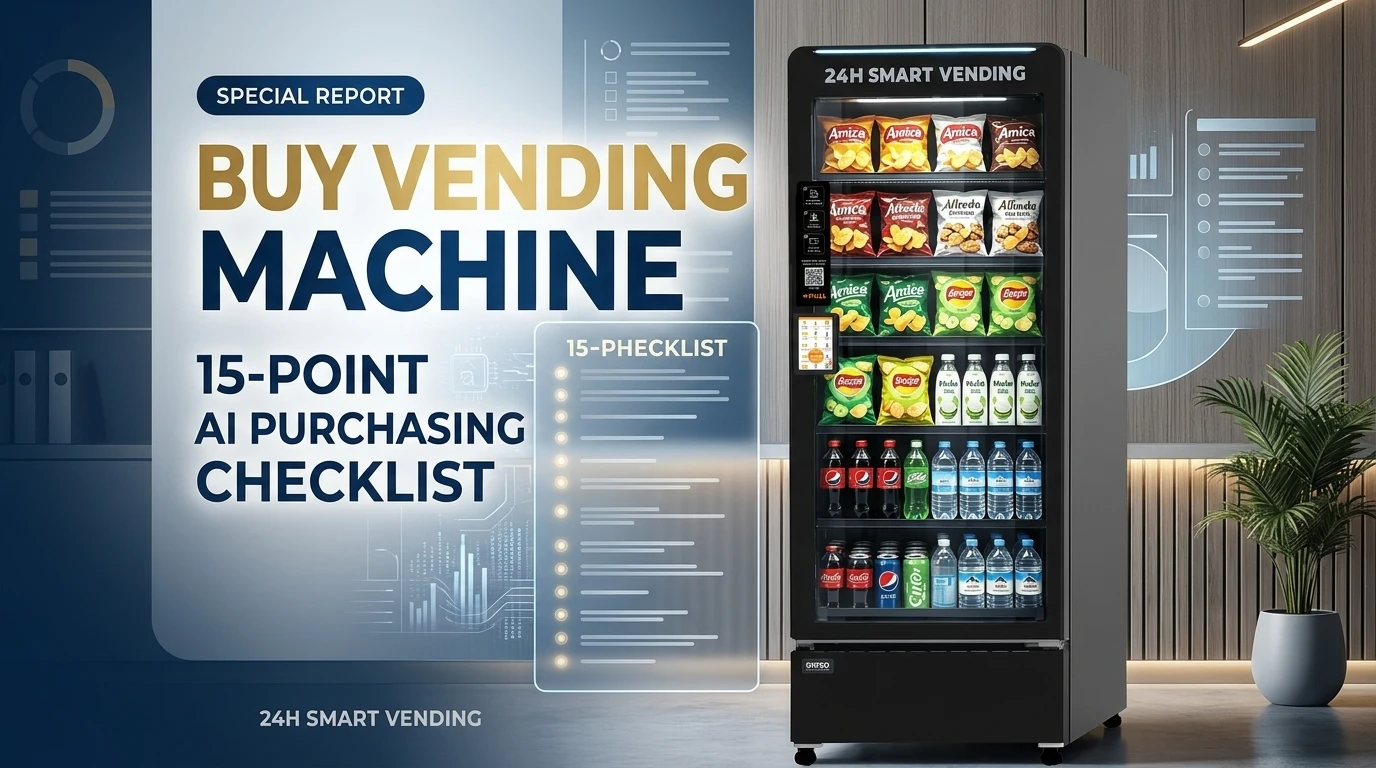
Upgrading to smart retail requires careful planning. When you plan to buy vending machine fleets, choosing the right AI technology determines your operational success. A poorly configured machine leads to inventory errors and frustrated customers.
This buying checklist helps operators evaluate AI vending solutions. We break down 15 critical checks across hardware, software, payments, and supplier reliability. Use this guide to minimize investment risks and secure reliable equipment.
Hardware Configuration Checks
Solid hardware forms the foundation of any reliable AI vending operation. You must verify physical components before committing to a purchase.
- Camera and Sensor Placement
Check the camera angles and weight sensors. The system needs full visibility of every shelf to accurately track product movement. Blind spots cause billing errors. - Cooling System Efficiency
Evaluate the compressor and insulation quality. Food and beverage operators need machines that maintain stable temperatures while minimizing electricity consumption. - Build Material and Durability
Inspect the cabinet construction. Operators placing machines in public spaces need tamper-proof locks, anti-vandalism glass, and sturdy steel frames to prevent theft.
Software System Evaluation
The intelligence of an AI machine relies entirely on its software architecture. You need systems that process data quickly and accurately.
- AI Recognition Accuracy
Test the visual recognition software with various products. The AI must accurately identify items even when customers move them quickly or place them on wrong shelves. - Real-Time Inventory Tracking
Verify the cloud synchronization speed. Your backend system should update inventory levels instantly after a customer closes the machine door. - Backend Management Dashboard
Review the operator dashboard. It must offer clear data visualizations, sales analytics, and low-stock alerts to help you route restocking teams efficiently.
Payment Compatibility
Frictionless payments drive vending sales. Customers abandon purchases if the payment terminal fails or lacks their preferred method.
- Cashless Payment Integration
Ensure the machine supports mobile wallets, NFC, and credit cards. Modern consumers rarely carry cash, making digital payment options mandatory for high sales. - Transaction Security Protocols
Check for PCI compliance and data encryption. The payment terminal must protect customer financial data during every transaction to prevent breaches. - Global Payment Gateway Support
Confirm that the system integrates with local payment gateways. International operators need software that processes regional payment methods smoothly.
After-Sales Support
Downtime destroys vending profits. Operators need immediate assistance when machines experience technical failures or software glitches.
- Technical Support Response Time
Ask the supplier about their standard response times. You need a partner who provides fast troubleshooting, preferably with 24/7 support availability. - Remote Troubleshooting Capability
Look for remote diagnostic features. The supplier should have the ability to restart systems or fix software bugs remotely without sending a technician. - Software Update Frequency
Inquire about their software maintenance schedule. Regular over-the-air updates ensure your machines receive the latest security patches and AI model improvements.
Spare Parts and Supplier Qualifications
A reliable supplier guarantees the long-term success of your vending business. You must evaluate their manufacturing standards and supply chain.
- Spare Parts Availability
Confirm the supplier stocks essential replacement parts. Operators lose money every day a machine waits for a replacement compressor or camera module. - Manufacturing Certifications
Request proof of industry certifications like CE, FCC, or ISO. These documents prove the manufacturer follows strict quality control standards during production. - Warranty Terms and Coverage
Read the fine print of the warranty policy. A trustworthy supplier offers comprehensive coverage for both hardware defects and software malfunctions.
Conclusion
A strategic approach protects your investment. Operators who thoroughly verify these 15 points secure machines that drive consistent profits. Always prioritize reliable suppliers who offer robust technology and dependable support over the cheapest initial price.
FAQ
- How much does an AI vending machine cost?
Prices vary based on hardware features and software capabilities. A standard AI cooler usually ranges from $1,500 to $4,000. Advanced models with dual-temperature zones or larger capacities cost more. - Why should I buy vending machine models with AI?
AI models eliminate the need for physical keypads and drop-sensors. Customers simply tap a card, open the door, grab items, and walk away. This frictionless experience boosts daily sales and customer satisfaction. - What happens if the AI recognition fails?
Quality systems use backup sensors, like weight pads, to verify transactions. If the camera misses an item, the weight sensor detects the missing mass and bills the customer correctly. - Do I need internet access for AI vending machines?
Yes, these machines require a stable 4G or Wi-Fi connection. The system relies on cloud computing to process video data, verify payments, and update inventory instantly. - How do suppliers handle software maintenance?
Reputable manufacturers provide over-the-air (OTA) updates. They push new firmware directly to your machines to improve AI accuracy, update payment gateways, and fix security vulnerabilities automatically.