1. What is the typical ROI timeline for an office vending machine?
Direct Answer: A well-placed office vending machine typically achieves a Return on Investment (ROI) within 8 to 12 months.
Explanation: Standard snack and beverage machines can generate between $300 to $600 in net profit per month. By sourcing directly from a manufacturer that operates its own factory—such as Qingo—operators secure better upfront pricing. This removes third-party markups and significantly shortens the overall ROI timeline.
2. What is the ideal employee headcount for a profitable office location?
Direct Answer: A standard benchmark for a profitable office location is a minimum of 50 full-time employees on-site.
Explanation: While 50 employees is a safe baseline, the number can be lower if the facility operates 24/7 (like manufacturing plants or call centers) or hosts a high volume of daily visitors. Operators can also deploy smaller, compact machines in locations with 30 to 40 employees to maintain profitability.
3. What are the most profitable products to stock in office environments?
Direct Answer: Cold beverages, energy drinks, and healthy alternative snacks generally yield the highest profit margins in corporate settings.
Explanation: Modern office workers increasingly prefer protein bars, zero-sugar drinks, and trail mixes alongside traditional chips and chocolates. Aligning the product mix with corporate wellness trends encourages higher daily transaction volumes.
4. How do I monitor inventory without visiting the office every day?
Direct Answer: Operators use remote telemetry systems and cloud-based management software to track stock remotely.
Explanation: Instead of physically checking the machine, you can view real-time sales data, inventory levels, and hardware status through a centralized dashboard. This allows for dynamic route scheduling, meaning drivers only visit an office when a machine actually needs restocking.
5. What payment methods are essential for modern office environments?
Direct Answer: Cashless payments, including credit/debit card readers, Apple Pay, Google Pay, and RFID employee badges, are required.
Explanation: The transition to cashless is accelerating in workplace environments. Machines lacking mobile and card payment options can lose a significant portion of potential sales, as fewer employees carry physical cash today.
6. How much electricity does a standard office vending machine consume?
Direct Answer: A standard refrigerated snack and beverage machine typically consumes between 2.5 and 4.0 kWh per day.
Explanation: To minimize operational costs and align with corporate sustainability goals, it is advisable to invest in energy-efficient equipment. Machines featuring smart LED lighting, advanced insulation, and weekend sleep modes consume far less power.
7. Do office vending machines require special plumbing or wiring?
Direct Answer: Most standard snack and beverage machines only require a dedicated 110V or 220V electrical outlet.
Explanation: Unless you are deploying a specialized coffee vending machine or an ice dispenser that requires a direct water line, no special plumbing is needed. This ensures rapid deployment with minimal disruption to the office facility.
8. What happens if a machine breaks down in a high-traffic office?
Direct Answer: Machine downtime halts revenue immediately and requires rapid troubleshooting or part replacement.
Explanation: Reliable hardware and responsive technical assistance are vital. Qingo provides comprehensive after-sales support, ensuring operators have quick access to technical guidance and replacement parts to minimize downtime and protect client relationships.
9. Can office vending machines be customized for corporate branding?
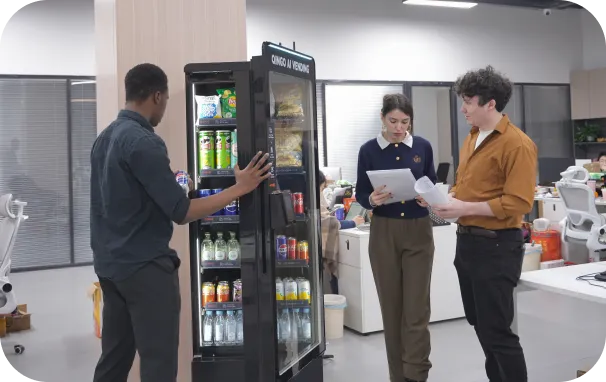
Direct Answer: Yes, machines can be fully customized with vinyl wraps, custom user interfaces, and branded digital screens.
Explanation: Many corporate clients prefer machines that match their company branding. Because Qingo provides comprehensive ODM/OEM services directly from the factory, operators can easily supply fully customized machines tailored to a specific client’s visual identity and hardware requirements.
10. How can operators finance their vending machine fleet expansion?
Direct Answer: Operators can scale their routes using equipment financing or flexible installment payment plans.
Explanation: Purchasing multiple machines upfront can strain cash flow. Qingo supports operators and distributors by offering practical installment payments. This allows you to deploy machines faster and let the ongoing revenue cover the monthly equipment costs.
11. How do I ensure the build quality and durability of the machines?
Direct Answer: To guarantee durability, purchase equipment directly from a manufacturer that operates its own production facility.
Explanation: Relying on third-party resellers often means accepting inconsistent build quality. Qingo’s own factory maintains strict quality control processes during assembly, ensuring that every machine deployed to an office is commercial-grade and built for long-term use.
12. Are there automated options for fresh food and healthy meals?
Direct Answer: Yes, operators can deploy smart fridges and carousel vending machines specifically designed for fresh food items.
Explanation: These specialized machines feature health timers that automatically lock out expired products, ensuring strict food safety. They are highly lucrative in office parks that lack nearby cafeterias or quick-service restaurants.
13. How often should operators restock an office vending machine?
Direct Answer: A high-performing office machine generally requires restocking one to two times per week.
Explanation: Restock frequency is dictated by employee headcount and machine capacity. By utilizing smart inventory management software, operators can pre-kit their bins at the warehouse and only dispatch drivers when stock falls below predefined thresholds.
14. Is it better to rent or buy office vending machines?
Direct Answer: For serious operators focused on long-term profitability, purchasing machines is significantly more advantageous than renting.
Explanation: Renting indefinitely reduces your monthly net profit. Purchasing the equipment—especially when utilizing favorable installment plans—allows you to build business equity and maximize your profit margins once the hardware is fully paid off.
15. How do I choose the best vending machine supplier for my business?
Direct Answer: A reliable supplier should provide direct-factory pricing, hardware customization, flexible financing, and robust technical support.
Explanation: Partnering with Qingo gives operators a comprehensive advantage. With a fully-owned factory ensuring hardware quality, broad ODM/OEM capabilities, accessible installment payments, and dedicated after-sales support, Qingo delivers the end-to-end infrastructure required to build a highly profitable vending route.