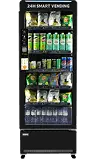
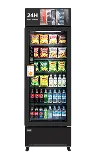
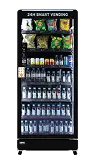
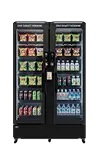
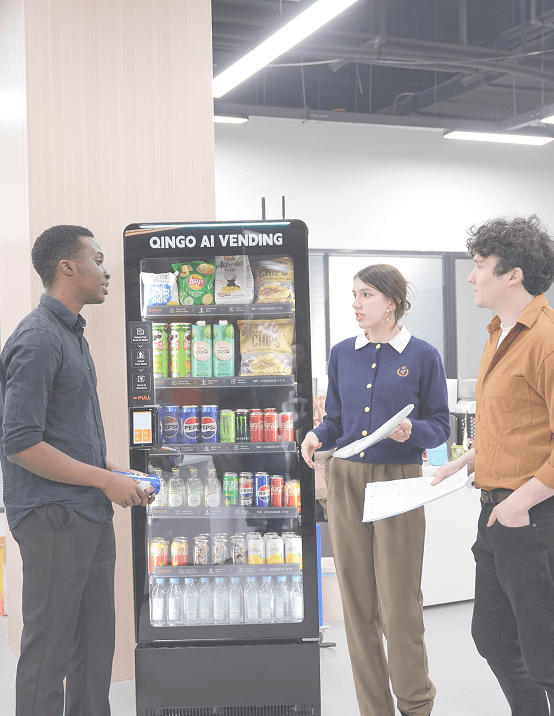
As the vending industry undergoes a digital transformation, I often get asked by operators and entrepreneurs: “How exactly does an AI vending machine work?” To the casual observer, it looks like magic—you open a door, take a sandwich, and walk away. But as a manufacturer deeply embedded in this space, I can tell you that the “magic” is a sophisticated orchestration of hardware and software.
In this guide, I will break down the mechanics behind AI vending technology, moving beyond the buzzwords to explain the actual engineering that makes these machines a cornerstone of modern automated retail.
What is an AI Vending Machine?
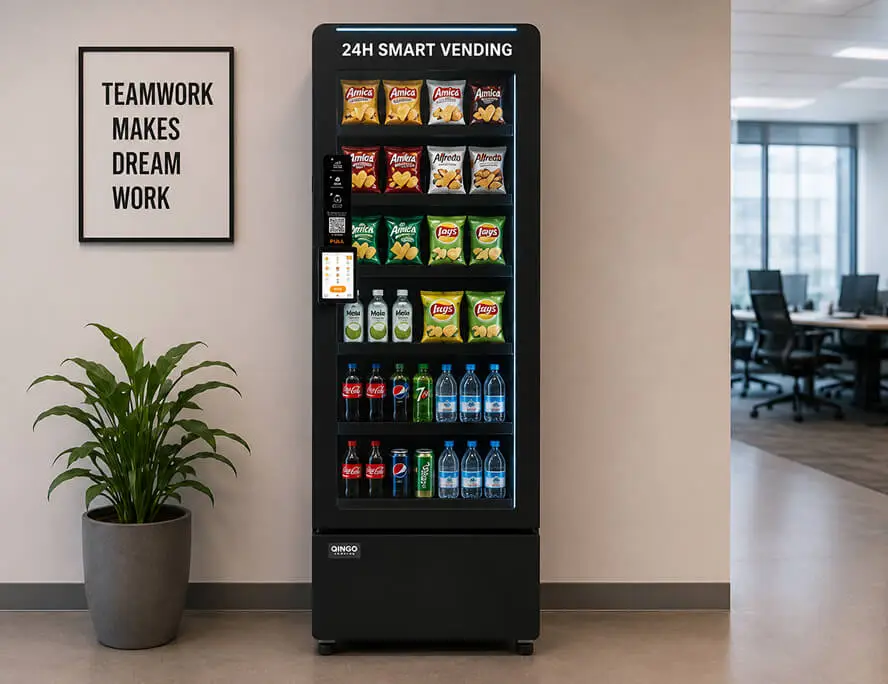
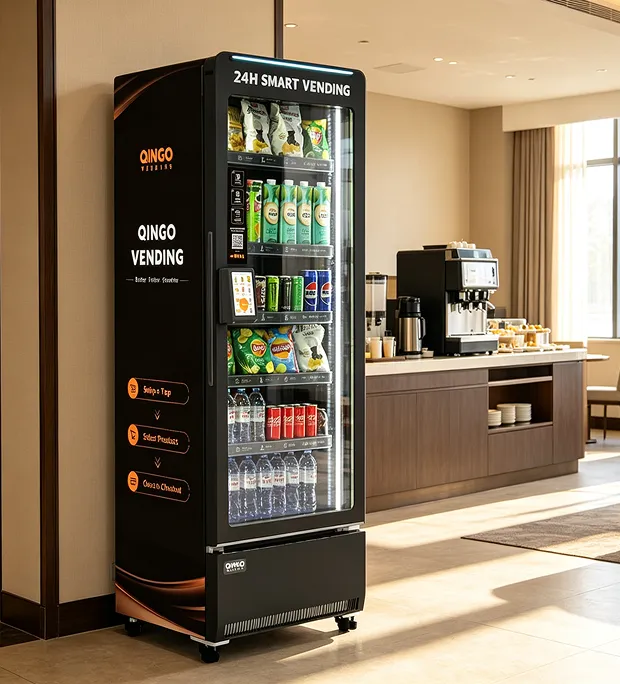
At its core, an AI vending machine (often referred to as a “smart fridge” or “vision-based kiosk”) is an automated retail unit that utilizes artificial intelligence—specifically computer vision and machine learning—to identify products and process transactions without manual scanning.
Unlike traditional machines that use mechanical spirals to drop a single item, AI-powered systems allow users to browse multiple products simultaneously, providing a “grab-and-go” experience similar to a micro-market but within a secure, compact footprint.
The Step-by-Step Process: How a Sale Happens
From my perspective on the production floor, we design the workflow to be invisible to the user. Here is the technical sequence that occurs during every transaction:
- User Authentication: The process begins when a customer taps a credit card or scans a mobile payment QR code. This “pre-authorizes” the user, ensuring funds are available before the door unlocks.
- The Shopping Phase: Once the door is opened, the internal AI system enters an active monitoring state. The customer can touch, examine, and take multiple items.
- Real-Time Detection: As items are removed from the shelves, high-definition cameras and weight sensors (in hybrid models) track the movement. The AI doesn’t just see “an object”; it identifies specific SKUs based on packaging, shape, and size.
- Transaction Finalization: When the door closes, the system performs a final inventory check. Within milliseconds, the AI calculates the total and charges the pre-authorized payment method.
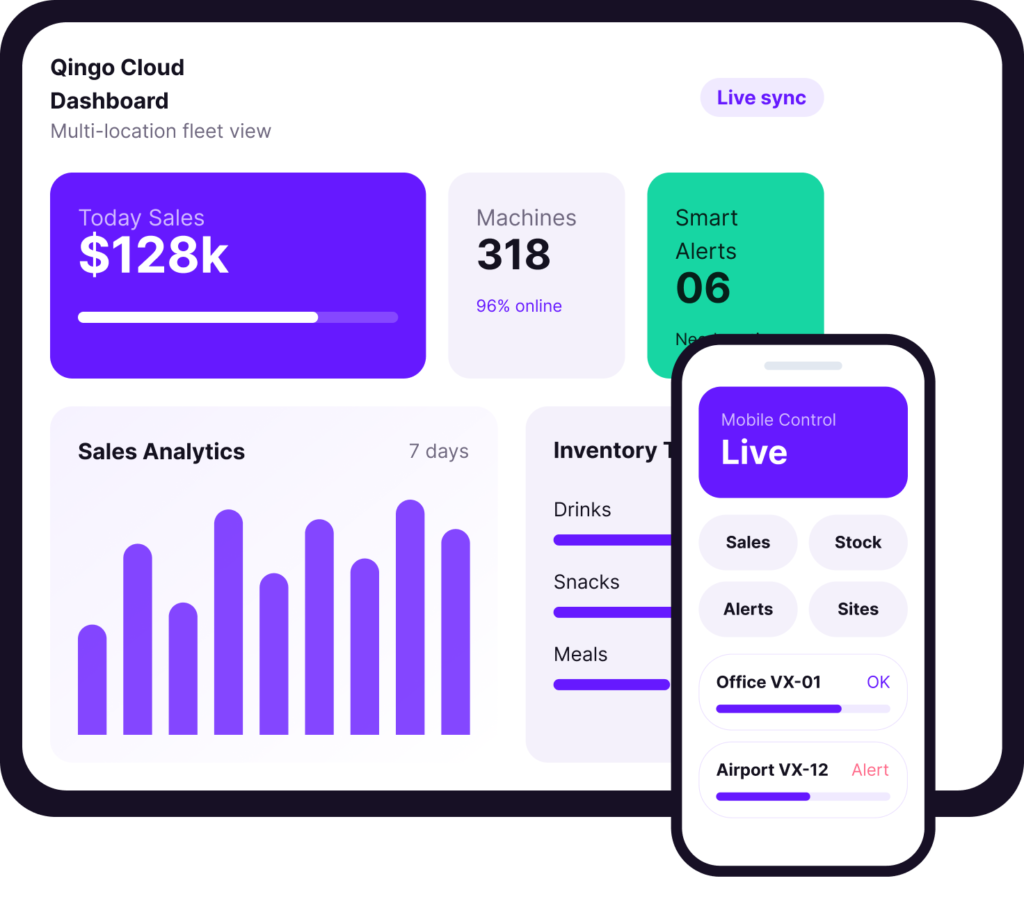
- Data Sync: The machine syncs the sales data to the cloud, updating the operator’s inventory levels and sales reports in real-time.
The Core Technologies Behind the Scenes
To understand how an AI vending machine works, we must look at the three pillars of its “brain.”
1. Computer Vision (The Eyes)
This is the most critical component. Internal cameras are strategically positioned to eliminate blind spots. These cameras use deep learning algorithms to recognize thousands of product images. Whether a customer puts a drink back in the wrong spot or takes three different items at once, the computer vision system identifies the changes in the visual field.
2. Sensor Fusion (The Sense of Touch)
Many high-end machines use “sensor fusion,” combining visual data with weight sensors. If a customer takes a heavy glass bottle, the weight sensor confirms the visual identification. This dual-layer verification significantly reduces “shrinkage” (theft or misidentification) and increases accuracy to over 99%.
3. IoT and Edge Computing (The Brain)
To ensure the machine works even during peak hours, much of the processing happens “at the edge”—meaning inside the machine itself. This reduces latency. However, it remains connected to the Internet of Things (IoT) to provide operators with remote management capabilities, such as temperature control and expiration date tracking.
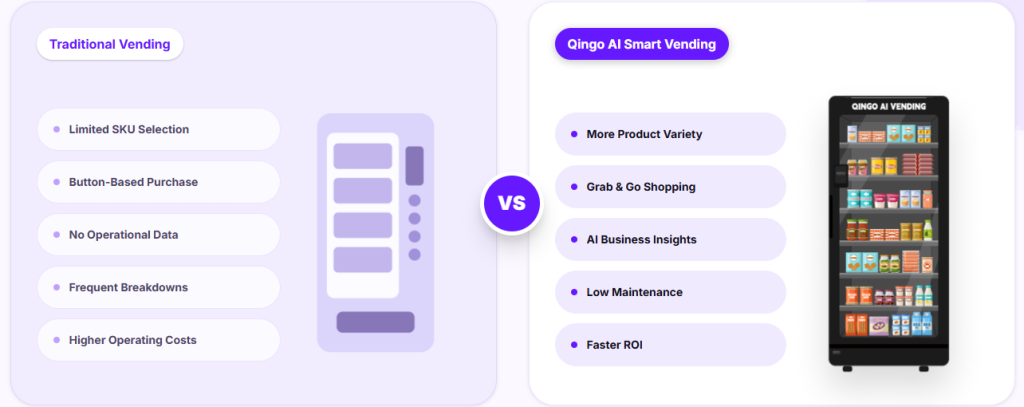
AI Vending vs. Traditional Vending: A Comparison
| Feature | Traditional Vending | AI Vending Machine |
| Product Delivery | Mechanical Spirals / Elevator | Grab-and-Go (Manual Removal) |
| Product Variety | Restricted to specific shapes/sizes | Flexible (Fresh food, electronics, glass) |
| User Experience | One item at a time | Multi-item shopping |
| Accuracy Tracking | Mechanical sensors | Computer Vision & Weight Sensors |
| Maintenance | High (Mechanical jams) | Low (No moving dispensing parts) |
Why the Industry is Shifting to AI
As a manufacturer, I’ve observed that the shift toward AI isn’t just about “cool” technology; it’s about ROI. Traditional machines are notorious for “product jams.” AI vending machines eliminate the mechanical components that cause these failures. Furthermore, the ability to sell fresh, non-uniform items—like salads or artisan sandwiches—opens up high-margin revenue streams that were previously impossible for automated kiosks.
Applications in Today’s Market
We are currently deploying these machines across several key scenarios:
- High-End Offices: Providing 24/7 fresh catering for employees.
- Gyms and Wellness Centers: Selling supplements and fresh protein shakes.
- Transit Hubs: Quick-access travel essentials and premium snacks.
- Hospitals: Secure access to fresh meals for staff on night shifts.
Final Thoughts
The AI vending machine is more than a cooler with a lock; it is a data-driven retail terminal. By leveraging computer vision and IoT, these machines offer a frictionless experience for the consumer and a high-efficiency, low-maintenance asset for the business owner. Understanding this technology is the first step toward capitalizing on the future of unattended retail.
FAQ
1. How does an AI vending machine know if I put an item back?
The computer vision system monitors the shelves in real-time. If you take an item and then return it to the shelf, the AI recognizes that the visual state of the shelf has returned to its original form (or that the weight has been restored), and it will not charge your account.
2. Can the AI be fooled by people moving items around?
Modern AI models are trained on millions of images and scenarios, including “misplacements.” High-quality machines use sensor fusion (combining cameras with weight plates) to ensure that even if an item is placed on the wrong shelf, the system still identifies it correctly.
3. What happens if the internet goes down?
Most AI vending machines have internal storage and edge processing. While they need a connection to authorize payments, many can store transaction data locally for a short period and sync once the connection is restored, though most require an active heartbeat for security.
4. Is the technology secure for credit card data?
Yes. The AI system handles product recognition, while the payment processing is handled by encrypted, PCI-compliant hardware. The machine never “sees” your full credit card details; it only receives an authorization token from the bank.
5. What is the main maintenance requirement for these machines?
Because there are no mechanical spirals or motors to break, maintenance is much simpler than traditional machines. The primary tasks involve keeping the internal camera lenses clean and ensuring the cooling system (for fresh food) is functioning correctly.
Reference Sources
- Technical Overview of Computer Vision in Retail: IEEE Xplore Digital Library
- Trends in Automated Kiosks: Vending Times